Bend sits at 3,600 feet elevation in the high desert of Central Oregon, and our climate is unlike anything you will find on the other side of the Cascades. We deal with freezing winters where overnight lows regularly drop below zero, dry summers that push past 90 degrees, wildfire smoke seasons, significant UV exposure at altitude, and daily temperature swings that can exceed 40-50 degrees. Choosing the right garage door for these conditions is not just about curb appeal — it directly affects your energy bills, comfort, and how long the door lasts before it needs major repair or replacement.
At Brokentop Garage Doors, we have been installing garage doors across Central Oregon since 2016. We install CHI, Clopay, and Amarr doors, and we have learned through experience which products perform best in our specific conditions. Here is what matters most when choosing a door for a Bend-area home.
Insulation: The Most Important Factor
If your garage is attached to your home — and most in the Bend, Redmond, and Sisters area are — the garage door is the largest uninsulated opening in the building envelope. A non-insulated single-layer steel door provides almost no thermal barrier between the outside air and the wall your garage shares with your living space.
Understanding R-Value
R-value measures a material's resistance to heat transfer. Higher R-values mean better insulation. For Central Oregon, here is what we recommend:
- Attached garages (minimum): R-12. This provides meaningful insulation that will keep your garage above freezing on most winter nights and noticeably reduce heating costs for the rooms adjacent to the garage.
- Attached garages (recommended): R-16 to R-18. These doors use polyurethane insulation that fills every void in the door panel, providing excellent thermal performance and significantly quieter operation.
- Detached garages or workshops: R-8 to R-12, depending on whether you heat the space. If you use your detached garage as a workshop, higher insulation pays for itself quickly in reduced heating costs.
- Non-insulated doors: R-0 to R-4. We generally do not recommend non-insulated doors for attached garages in Central Oregon. The energy penalty over the life of the door far exceeds the upfront savings.
Polyurethane vs. Polystyrene Insulation
There are two main types of garage door insulation, and the difference matters:
Polyurethane is injected as a liquid foam that expands to fill every cavity in the door panel. It bonds to both the interior and exterior steel skins, creating a rigid, strong panel with no air gaps. Polyurethane-insulated doors are quieter, stronger, and have higher R-values per inch of thickness. This is what we recommend for Central Oregon homes.
Polystyrene (essentially Styrofoam) is cut into sheets and inserted between the door panels. It is less expensive but provides lower R-values, does not bond to the door skins, and leaves air gaps that reduce real-world performance. For budget-conscious projects, polystyrene-insulated doors are still far better than non-insulated doors.
Best Materials for Bend Climate
Steel with Polyurethane Insulation (Top Recommendation)
This is our most popular door type in Central Oregon, and for good reason. Steel doors with polyurethane insulation offer R-values of 12-18, outstanding durability, low maintenance, and strong performance across our full temperature range. Quality steel doors are hot-dip galvanized and coated with a baked-on primer and topcoat that resists UV degradation, rust, and peeling.
Steel thickness matters. Residential garage doors typically come in 25-gauge, 24-gauge, or premium 22-gauge steel. Thicker steel (lower gauge number) resists dents and damage better and tends to last longer. For homes with active families or in areas where wind-blown debris is a concern, we recommend 24-gauge or better.
Brands we install and trust for Central Oregon conditions include CHI Overhead Doors, Clopay, and Amarr. Each offers excellent insulated steel door lines, and we can help you choose the right model for your home and budget.
Composite and Faux-Wood Materials
Composite garage doors deliver the look of real wood without the maintenance headaches that real wood brings in Central Oregon. Our extreme UV exposure at altitude fades and dries real wood faster than at lower elevations, and the constant temperature cycling causes wood to expand, contract, warp, and crack over time. Composite doors are engineered to handle these conditions without the frequent refinishing that real wood demands.
The trade-off is cost — composite doors run significantly more than equivalent steel doors. But for homeowners who want the carriage-house or craftsman aesthetic that is popular in neighborhoods like Northwest Crossing, Broken Top, and River West, composite is the material that maintains its appearance long-term in our climate.
Real Wood
Wood garage doors are beautiful, and they are still popular for custom homes and high-end remodels. However, in Bend's climate, they require committed maintenance. Plan on refinishing every 2-3 years to protect against UV damage and moisture. Wood doors are also heavier than steel, which affects spring and opener sizing. If you choose wood, work with an experienced installer who understands the additional structural requirements.
Aluminum and Glass
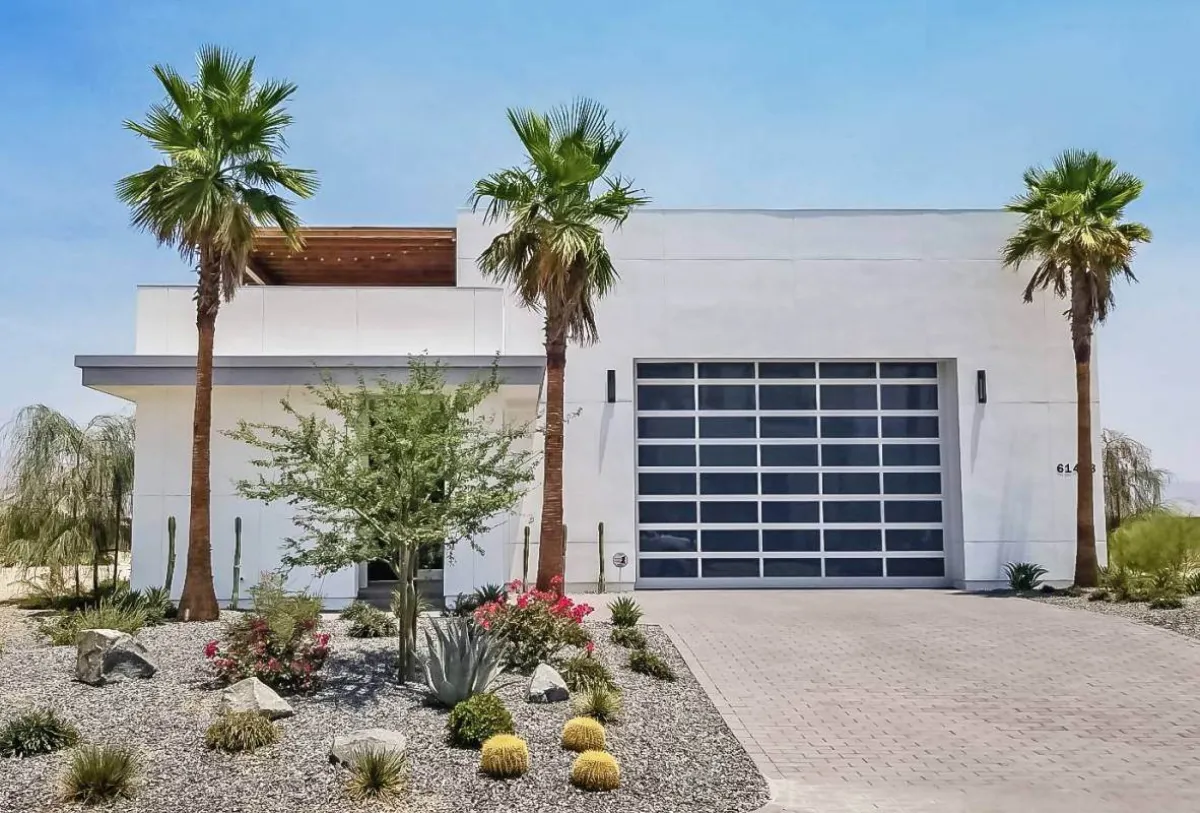
Full-view aluminum and glass doors have become trendy in modern home designs. They look striking and allow natural light into the garage. However, they are the worst-performing option for insulation and are not ideal for Central Oregon's temperature extremes unless used on detached structures where heating efficiency is not a priority. If you want the modern look, some manufacturers offer insulated glass panel options with thermal breaks that improve performance significantly.
Features That Matter in Central Oregon
Weatherstripping
The door itself is only as good as its seals. Quality weatherstripping along the bottom, sides, and top of the door prevents drafts, snow intrusion, moisture, and pest entry. We install commercial-grade weatherstripping rated for extreme temperatures on every door. The bottom seal (astragal) is particularly important — it needs to be flexible enough to seal against an uneven concrete floor even in subzero temperatures. Cheaper seals harden and crack in the cold, leaving gaps.
Wind Load Rating
Central Oregon can experience significant wind events, especially in open areas around Redmond, Terrebonne, and Powell Butte. While we are not in a hurricane zone, a properly wind-rated door withstands gusts without flexing or popping off the tracks. Doors with struts or reinforcement bars spanning the width of each panel perform better in high-wind conditions.
Hardware and Springs Rated for Cold
The door panels are one piece of the puzzle. The springs, rollers, hinges, and cables all need to perform reliably in extreme cold. We use high-cycle springs on every installation and choose hardware rated for our temperature range. Nylon rollers are particularly important in cold climates because they operate more quietly and smoothly than steel rollers when temperatures drop.
Color and Finish
Dark-colored garage doors absorb more heat from the sun, which can cause the door to expand more during summer days. In Central Oregon's intense sun, this can lead to binding and uneven operation if the door is not properly fitted with room for thermal expansion. Lighter colors reflect more heat and maintain more consistent dimensions throughout the seasons. If you prefer a dark door, make sure the installer accounts for thermal expansion in the fit.
Sizing and Configuration
Standard two-car garage doors are 16 feet wide by 7 or 8 feet tall. Single-car doors are typically 8 or 9 feet wide. Many newer homes in Central Oregon feature oversized garages to accommodate larger vehicles, boats, or RV storage. Custom sizing is available from all the brands we carry, though lead times and costs increase for non-standard sizes.
If you are considering a new garage door, we recommend scheduling a measurement and consultation. Door opening dimensions, headroom, sideroom, and backroom all affect which doors and openers will work for your specific garage.
What to Expect from Installation
A professional garage door installation typically takes 3-5 hours for a standard replacement (removing the old door and installing the new one). Custom doors, new construction, and opener installations add time. We handle the full installation including disposal of the old door, spring balancing, opener connection, and final safety testing.
Ready to choose the right garage door for your Central Oregon home? Call Brokentop Garage Doors at 541-203-7676 for a free on-site consultation and estimate. We serve Bend, Redmond, Sisters, Sunriver, La Pine, Prineville, Tumalo, Terrebonne, and Powell Butte. Licensed CCB #209697, with over 630 five-star Google reviews.
Related Resources
More guides on choosing and maintaining garage doors for Central Oregon's climate:
- Best Garage Doors for Bend, Oregon — a local installer's complete guide to top picks
- Garage Door Insulation Guide — R-values, types, and what matters at high elevation
- Steel vs Wood Garage Doors — which material performs best in Bend's climate
- Annual Maintenance Checklist — protect your investment with regular care