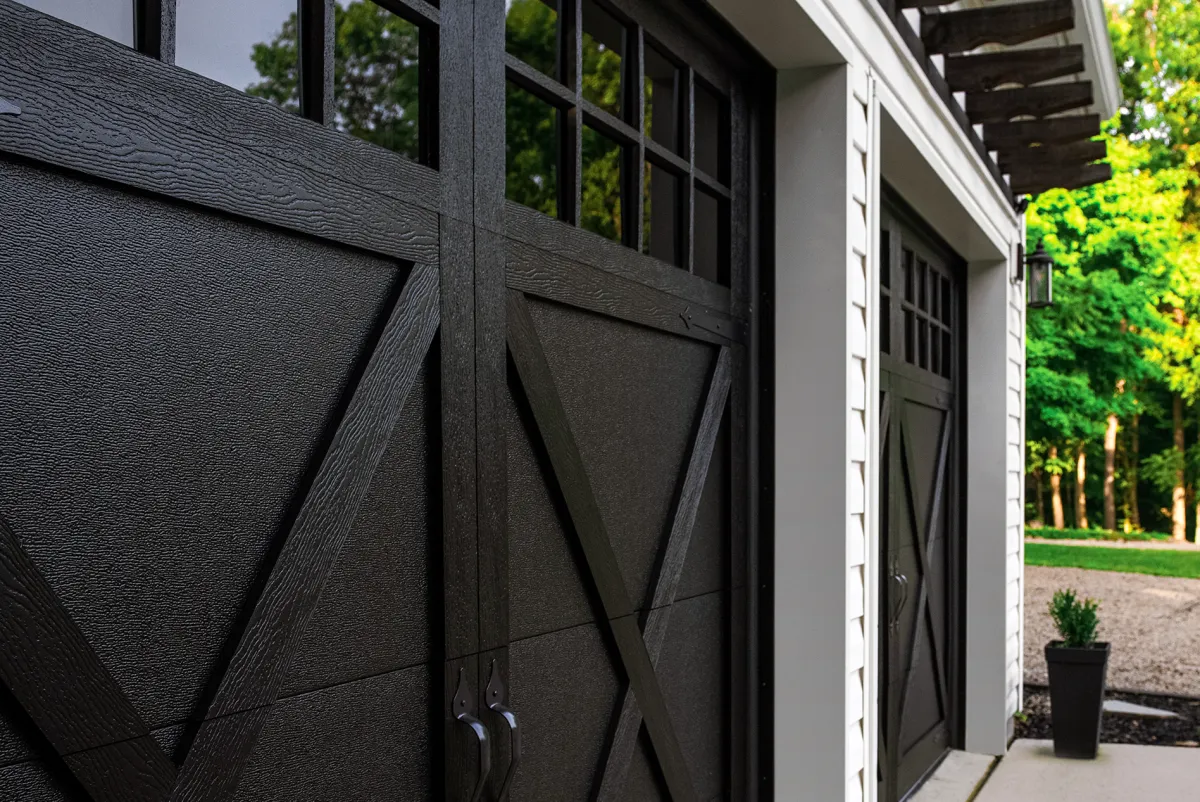
Your garage door is trying to tell you something. Most homeowners ignore the signs until the door stops working entirely — stuck halfway open at 6 AM with the car trapped inside. Here are the five warnings that mean it's time to call a professional before you're dealing with an emergency.
1. The Door Makes Grinding, Scraping, or Squealing Noises
A healthy garage door should be relatively quiet. If yours sounds like metal-on-metal grinding, high-pitched squealing, or rhythmic scraping, something is wearing out.
Most likely causes:
- Worn rollers — nylon rollers last 10-15 years, steel rollers less. When they wear, they grind against the tracks. This is the most common noise complaint we get in Bend.
- Dry tracks and hinges — Central Oregon's dry high-desert climate evaporates lubricant faster than coastal areas. Parts that should glide smoothly start grinding.
- Loose hardware — vibration loosens bolts, brackets, and hinges over time. A loose hinge flaps with each cycle, creating a rattling or banging sound.
What to do: Try lubricating the rollers, hinges, and tracks with silicone spray (not WD-40). If the noise persists, call us — worn rollers are a 30-minute fix and prevent bigger problems.
2. The Door Moves Slowly, Unevenly, or Jerks
Your door should travel smoothly from open to closed in about 12-15 seconds. If it hesitates, jerks, or one side moves faster than the other, the balance system is failing.
Most likely causes:
- Spring tension imbalance — if one spring has lost tension (or broken), the door tilts and the opener strains to compensate
- Bent or misaligned tracks — tracks can shift from impact (backing into the door), foundation settling, or temperature expansion
- Worn cables — fraying cables create uneven lifting force, causing the door to tilt or jerk
What to do: Stop using the door if it's visibly tilted — operating a crooked door can cause it to come off the tracks entirely. Call us for a balance check.
3. The Door Reverses, Won't Close, or Stops Mid-Travel
Modern garage door openers have safety systems that stop or reverse the door when something is wrong. If your door keeps reversing or won't close completely, the safety system is triggering — and that's actually a good thing.
Most likely causes:
- Dirty or misaligned photo-eye sensors — the two small sensors at the bottom of the tracks shoot an infrared beam across the opening. Dust, cobwebs, or direct sunlight can block the beam. This is the #1 cause and fixable in 2 minutes.
- Force setting too sensitive — the opener thinks the door is hitting an obstruction when it contacts the floor
- Spring or cable issues — the door is too heavy for the opener due to failing springs
DIY fix: Wipe both sensor lenses with a soft cloth. Check that both LEDs are solid green (not blinking). If that doesn't work, call us — the issue is likely mechanical.
4. You Can See Daylight Under or Around the Door
Stand inside your garage with the door closed on a sunny day. If you see strips of daylight along the bottom, sides, or top of the door, your weather seals have failed.
Why this matters:
- Cold air infiltration in winter increases heating costs (especially in attached garages)
- Water from rain and snowmelt enters the garage, causing floor damage and mold
- Mice, spiders, and insects use the gaps as entry points
- Dust from Central Oregon's volcanic soil blows into the garage constantly
What to do: Weather seal replacement is straightforward — we can do it in about an hour. At 3,600 feet elevation, UV exposure degrades seals in 5-7 years instead of the 10 years they're rated for. Plan on replacing them proactively.
5. The Door Is Over 15 Years Old and Showing Its Age
Garage doors last 15-30 years depending on material and maintenance. But a door that technically still works might be costing you in other ways:
- No insulation — older single-layer steel doors have no R-value. Modern insulated doors (R-12 to R-18) significantly reduce heating costs in Central Oregon winters.
- Outdated safety features — doors manufactured before 1993 may lack photo-eye sensors and proper auto-reverse, which are now required by federal law (UL 325).
- Curb appeal — your garage door is 30-40% of your home's front face. An updated door can add thousands in resale value.
- Frequent repairs — if you're calling for repairs more than once a year, a new door may be more cost-effective than continued fixes.
When to Call a Professional
Any of these signs warrants at least a phone call. For signs 1 and 4, you can try the DIY fixes first. For signs 2, 3, and 5, call us at 541-203-7676 — these involve springs, cables, or opener components that require professional tools and training.
Same-day service available Mon-Fri when you call by 2 PM. We carry parts on every truck for most common repairs.