HOAs. I know. Nobody's favorite topic. But if you live in Broken Top or Tetherow or NW Crossing, your homeowners association has opinions about your garage door. Strong opinions. And you need to deal with that before you order anything.
I've been installing garage doors in Bend's planned communities since 2016, and I'll tell you the thing nobody wants to hear: the HOA process isn't that bad. It's just tedious. There are forms to fill out, committees to submit to, and a waiting period where someone you've never met looks at a picture of a door and decides if it matches the neighborhood. It's bureaucracy. But it's predictable bureaucracy, and once you understand the pattern, it moves pretty quickly.
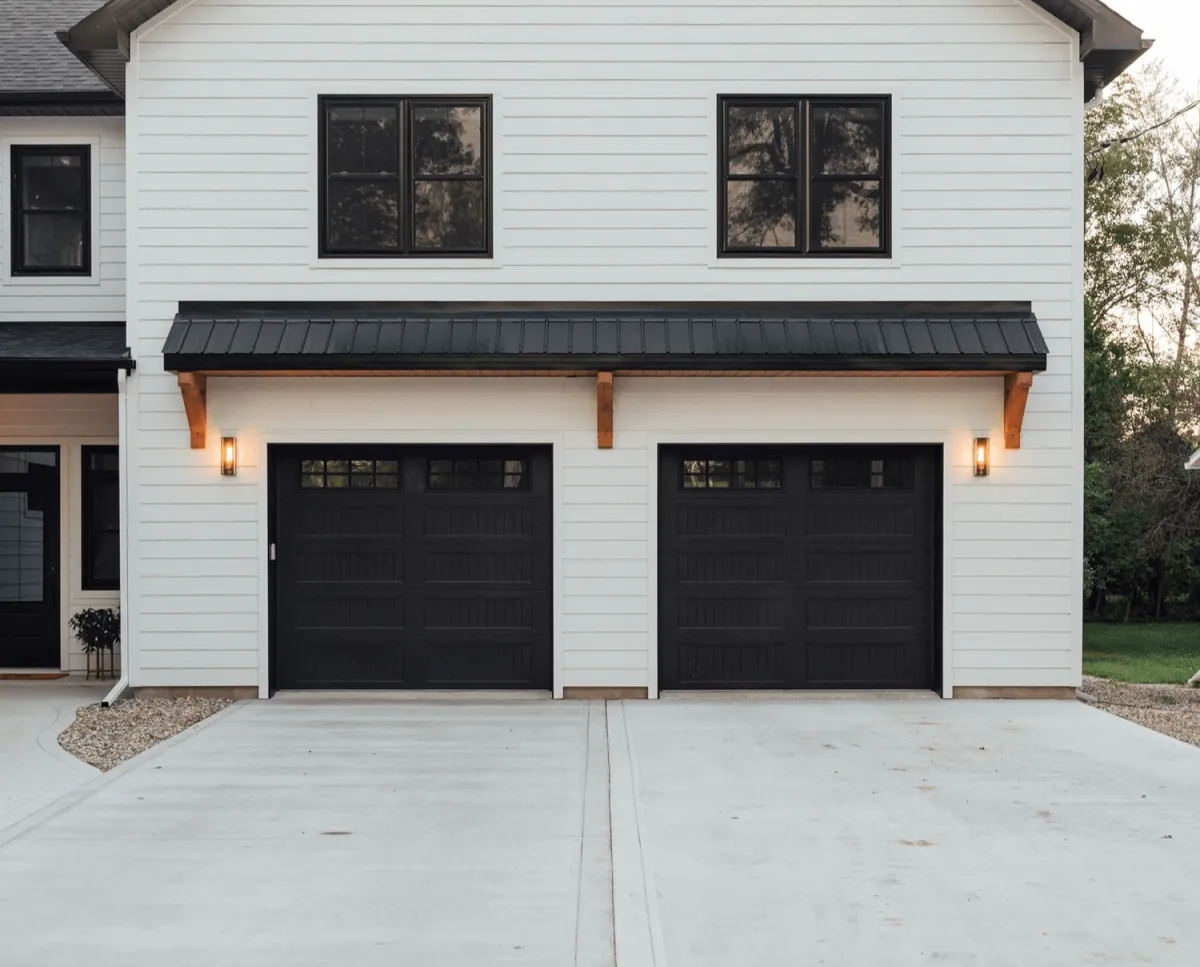
The alternative is worse. I've watched homeowners order a gorgeous door, get it installed, and then open their mailbox two weeks later to find a letter from the architectural review committee telling them it doesn't comply. That's a door they now have to remove and replace at their own expense. I've seen it happen three times in the last couple of years, and every single one was avoidable. So let's walk through what I know about these communities and how to get your door approved without the headache.
What Every HOA Around Here Cares About
The specifics vary by community, but after doing enough doors in enough neighborhoods, the pattern is clear. Every HOA in the Bend area is basically worried about the same handful of things. Your garage door is somewhere between 30 and 40 percent of what people see when they look at the front of your house. That's a huge visual footprint. So the committees pay attention.
Color is the first thing they look at. Earth tones across the board. Browns, tans, grays, muted greens. If you're thinking about a white door, check first. If you're thinking about anything bright or bold, check twice. Most communities publish an actual palette of approved colors, sometimes down to the manufacturer paint code. Bring that palette when you come talk to us and I can match it to what's available in about five minutes.
Style is next. Carriage house doors are the safest bet in almost every Bend HOA. They have that mountain-lodge, craftsman feel that fits the Central Oregon aesthetic. Raised panel doors work in some places. Contemporary full-view glass doors are welcome at Tetherow but will get you a rejection letter in most other communities. Flush-panel doors -- the plain, flat ones -- are a hard no in just about every upscale neighborhood around here unless there's a very specific contemporary context.
Materials matter more than you'd think. Most communities want a door that looks like wood, whether or not it actually is. Steel with a wood-grain texture is the sweet spot -- you get the look without the maintenance nightmare that real wood becomes in our high-desert climate. A few of the higher-end communities specifically ban vinyl and fiberglass. Some require either real wood or a premium composite. The safest approach is always insulated steel with a convincing wood-grain finish. It satisfies nearly everyone.
Windows are surprisingly contentious. Some HOAs require them for consistency across the neighborhood. Others restrict the style -- divided-light only, or frosted glass instead of clear. A few have opinions about which section of the door the windows go in. It seems like a small detail until your submission comes back with a note that says "window style not approved" and you're starting over.
Decorative hardware -- the handles and strap hinges that give carriage house doors their look -- is required in some communities and prohibited in others. Rustic mountain aesthetic neighborhoods want the heavy wrought-iron stuff. Contemporary communities want clean lines with nothing extra. Get this wrong and it's another round of revisions.
Maintenance standards apply everywhere. Peeling paint, dented panels, rust, broken windows -- any of that can trigger a violation notice. Sometimes the door that brings people to us isn't a new installation at all. It's a replacement forced by an HOA letter saying their current door doesn't meet the maintenance standard anymore. That's actually fine. It's an excuse to get a better door, and we can make sure the new one passes every requirement on the list.
The Communities and What I've Seen There
I've done enough doors in these neighborhoods to know what flies and what doesn't. Here's the quick version, community by community. And I want to be clear -- these are my observations from years of actual installations, not guarantees. Committees change. Guidelines get updated. Always check your current CC&Rs before you commit to anything.
Broken Top leans mountain lodge. Carriage house style, warm wood tones, walnut and cedar finishes. Decorative hardware in black or dark bronze. They want it to look like it belongs on a luxury mountain retreat. High-quality steel with wood-grain overlay passes without issue. Real wood is welcomed but not required.
Tetherow is the outlier. Modern architecture is the vibe there, so full-view aluminum and glass doors actually work. Darker palettes -- black, charcoal, deep gray. Clean lines, minimal ornamentation. But it still has to look expensive. A basic painted steel door won't cut it even though the style is contemporary.
NW Crossing is all Craftsman. Divided-light windows, clean panels, warm but varied colors. This is one of the few neighborhoods where you'll see greens and blues alongside the traditional wood tones. Two single doors instead of one double is a popular move here because it fits the Craftsman proportions of the homes. Good design choice, and the committee seems to appreciate it when homeowners think about it that way.
Awbrey Butte tends traditional to transitional. Wood-look steel in natural tones. Restrained hardware. Nothing overly ornate, nothing too plain. The hillside means a lot of garages face the street prominently, so the door is a major visual element. Cedar, walnut, driftwood -- keep it in that family and you're usually fine.
Shevlin Commons wants rustic mountain. Dark stain finishes, heavy strap hinges, ring handles. They want it to look like it was milled from local timber. Insulated steel with a convincing wood-grain overlay is the practical choice that satisfies the aesthetic. That's probably our most common install there.
Eagle Crest in Redmond is a resort community, and a lot of those homes are vacation properties. The priority shifts toward durability and low maintenance. Insulated steel in earth tones. Something that looks presentable year-round without an owner around to maintain it. Carriage house and raised panel both work. Just make sure it'll survive benign neglect.
Caldera Springs near Sunriver is similar to Eagle Crest -- vacation homes, absentee owners, Portland people who visit a few times a year. Dark earth tones that hide pine pollen and dust. Steel construction. Something you can forget about between trips.
Getting Your Door Approved Without Losing Your Mind
The process is the same in nearly every community. Five steps, and none of them are hard. They just require some patience and a little paperwork.
First, get the current version of your CC&Rs and architectural guidelines. Not the version you got when you bought the house. The current one. Guidelines get revised. Call your HOA management company or check the owner portal. This is the document that tells you exactly what's allowed, and it's the one the committee will be checking your submission against.
Second, contact the Architectural Review Committee before you pick a door. Not after. Before. Ask them what format they want the submission in, what documentation they need, whether they have specific product requirements. Some committees are surprisingly helpful when you approach them early. They'll tell you what's been getting approved lately, point you toward examples in the neighborhood, and give you a sense of what the current committee members care about. That's gold.
Third, put together a submission that makes it easy for them to say yes. Model and manufacturer, color samples, spec sheets, photos or renderings. We do this all the time. When you choose a door through us, we prepare the ARC documentation for you -- formatted the way committees actually want to see it. I've found that a clean, professional submission gets approved faster than a handwritten note with a screenshot from a website. The committee members are volunteering their time. Make their job easy and they'll make your life easy.
Fourth -- and this is the one people skip -- get written approval before you order the door. Not verbal. Not an email from one board member who says it looks great. Formal, written approval from the committee. Manufacturers charge restocking fees on custom orders. Some won't take returns at all. Ordering before you have approval in hand is gambling with real money.
Fifth, keep every piece of paper. The approval letter, the spec sheets, the color samples, all the correspondence. File it away with your home records. I've seen homeowners get violation notices years after installation because the committee turned over and nobody had records of the original approval. If you've got your paperwork, that's a five-minute conversation instead of a months-long dispute.
The timeline is usually two to four weeks from submission to approval. Most committees meet monthly. Spring and summer are busier. If your proposal is straightforward -- a door that clearly fits the guidelines in a color and style that's already common in the neighborhood -- it sails through. If you're pushing boundaries, expect questions and maybe a revision request. Budget a month to be safe.
One thing I'll add about the process: it helps to look at what's already in the neighborhood. Drive around your community and look at the garage doors on the houses near yours. If you see a door you like that looks like it's been there a while, snap a photo. That door already passed the committee. It's not a guarantee that the same door will be approved for your house -- lot-specific restrictions exist, and committees evolve -- but it's a strong data point. I've walked submissions through committees where the homeowner said "this is the same model and color as three other houses on my street" and the approval came back in a week. Context matters. Committees want consistency, and showing them you've done your homework -- that you're trying to match the neighborhood rather than stand out from it -- goes a long way.
I'll also mention the replacement scenario, because it comes up constantly. Maybe you're not choosing a new door for a remodel or an upgrade. Maybe your current door has a dented panel, or the paint is peeling, or a spring broke and the door's been sitting crooked for a month, and you got a violation letter. Now you need a new door and the HOA is part of the timeline. Don't panic. The same process applies, but in my experience, committees are faster with replacement requests when the existing door is clearly in violation. They want the problem fixed. Submit your proposal with a note that you're addressing an existing violation, include the letter if you got one, and most committees will prioritize it. I've seen violation-driven replacements approved in under two weeks in communities that usually take a month. The committee wants the bad door gone as much as you do.
The doors that I see get approved most consistently across Bend HOAs are the CHI 5200 series carriage house doors. Multiple stain finishes, wood-grain overlay on insulated steel, zero maintenance. I've installed that door in probably every planned community in Bend at this point and I can't remember a single ARC rejection. The Clopay Canyon Ridge is the premium option -- faux wood composite on a steel frame, looks and feels remarkably like the real thing. That one's popular in Broken Top and Awbrey Butte where the committee expects a luxury product. The CHI 4200 series is more versatile -- cleaner lines, works across traditional to transitional styles, and it's a workhorse. And the Amarr Classica hits a good mid-range price point when budget matters but the door still needs to pass muster.
If you're not sure where to start, that's literally what we're here for. Tell me your community, show me your guidelines if you have them, and I'll narrow it down to two or three doors that I know work there. I'd rather spend twenty minutes on the phone saving you from a mistake than show up in six weeks to rip out a door that didn't get approved.
Call us at 541-203-7676 for a free consultation. We'll figure out what your HOA wants, find you a door that checks every box, put together your ARC paperwork, and handle the installation once you've got the green light. And if the committee comes back with changes, we'll revise and resubmit. That's part of the job. We stay in it until you've got approval and a door you're happy with.
You can also request a free estimate online, check out our custom door options, or read about our installation process. We serve Bend, Redmond, Sisters, Sunriver, La Pine, and all of Central Oregon. Licensed in Oregon, CCB #209697.
Tyler and Ashley Ottesen own Brokentop Garage Doors and have been navigating Bend's HOA requirements since 2016. Tyler has installed doors in Broken Top, Tetherow, NW Crossing, Awbrey Butte, Shevlin Commons, Eagle Crest, and most of the other planned communities in the area. He has opinions about architectural review committees, but he keeps them professional.