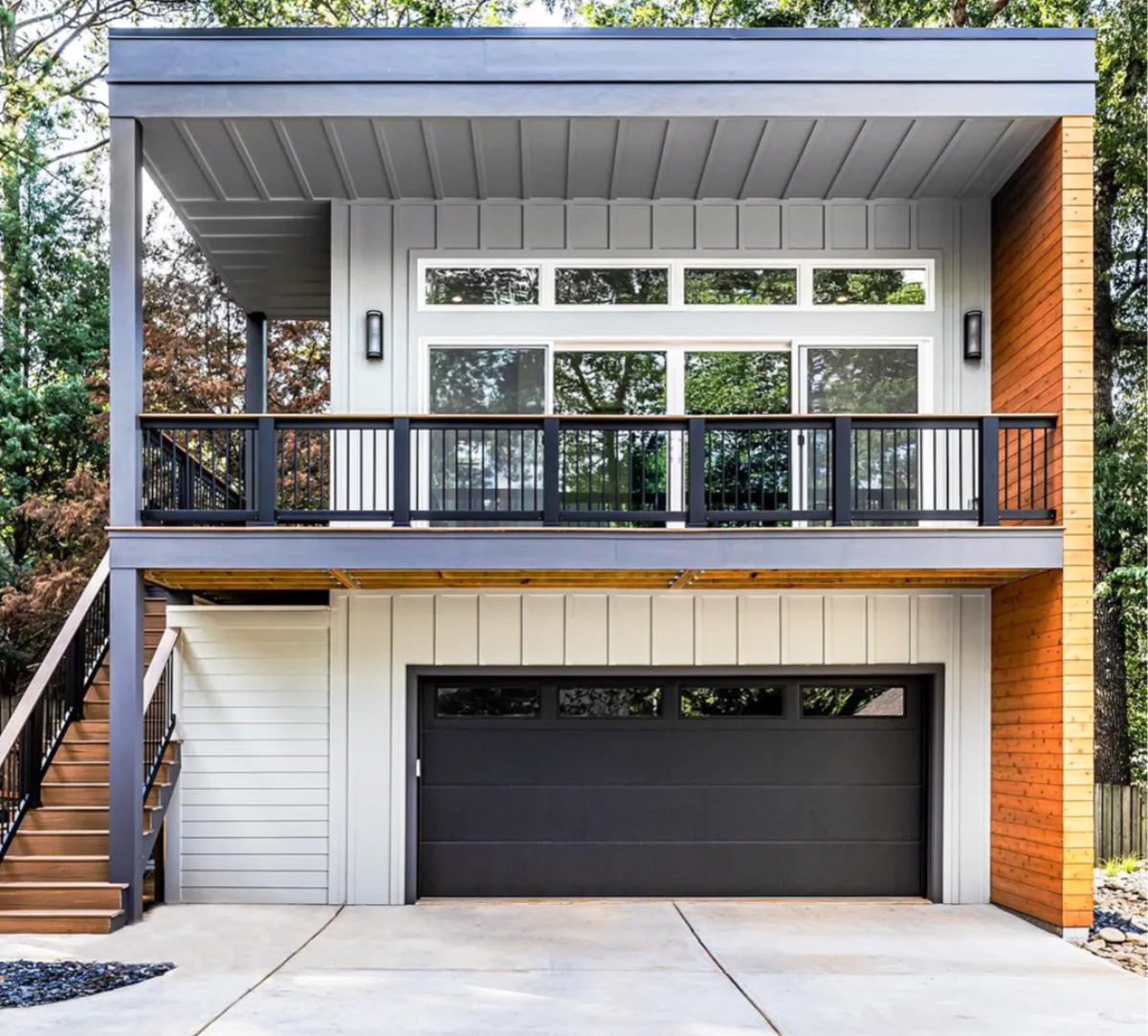
Let me clear something up, because I get this question every week. "Overhead door" and "garage door" — same thing. Overhead Door is also a brand name, which confuses people even more. So when someone calls and says "I need an overhead door repair," I always ask: do you mean you have an Overhead Door brand door, or are you just talking about your garage door? About 90% of the time, they mean their garage door. The other 10% actually have an Overhead Door Corporation product, which we also service.
I figured I'd write up the answers to the questions I field most often about overhead doors — the brand, the generic term, the types, the repairs, all of it. Think of this as a conversation I've had a hundred times, just written down so I don't have to repeat myself quite as often. If you're in Bend, Redmond, Sisters, or anywhere in Central Oregon and you've got a door question, chances are it's covered here.
"So what IS an overhead door, exactly?"
Any door that opens by moving up and overhead — into the ceiling space above the opening — is technically an overhead door. That covers the standard residential garage door on your house, the big sectional steel doors on commercial buildings, rolling steel coiling doors on storage units, and everything in between. They all operate by moving upward along tracks and storing overhead when open. Hence the name.
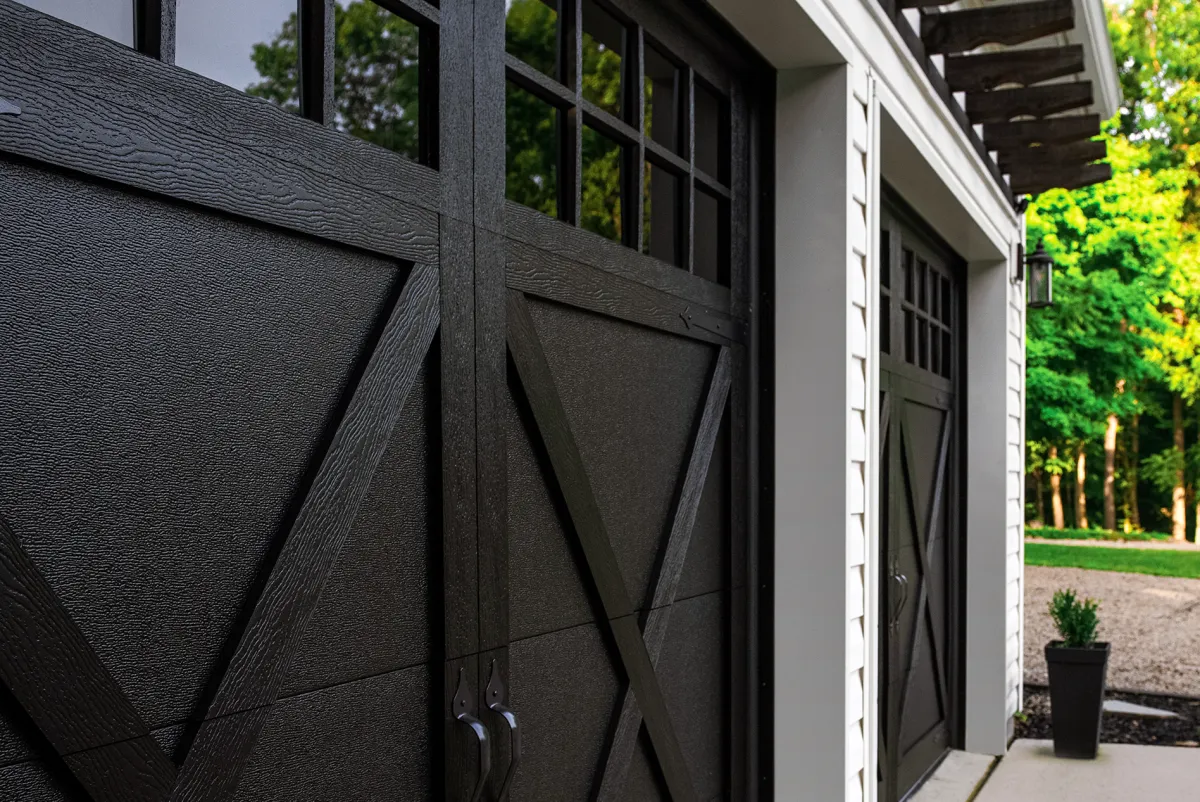
The confusion comes from the Overhead Door Corporation, which was founded in 1921 and was one of the first companies to manufacture upward-acting garage doors. They slapped the generic term right on their brand name, kind of like how people call every adhesive bandage a Band-Aid or every tissue a Kleenex. If you have an "Overhead Door," it might be the actual brand, or it might just be what you call your garage door because that's what your dad called it.
For repair purposes, it doesn't matter much. The mechanisms are fundamentally the same across brands. Springs, tracks, rollers, hinges, cables, panels, operators. I work on all of them — Overhead Door, CHI, Clopay, Amarr, Wayne Dalton, Northwest Door, and every other manufacturer you'll find on homes and businesses in Central Oregon.
"What types of overhead doors do you work on?"
All of them. But here's a quick rundown of what I see in this area, because Central Oregon has a mix that's a little different from, say, Portland or the valley.
Sectional doors. The standard. Horizontal panels that ride in vertical tracks and curve to stack along the ceiling when open. This is what 95% of residential garages have, and what most commercial buildings use too. Insulated or non-insulated, steel or wood or composite, single or double width. When someone calls about an "overhead door repair," this is almost always what they're talking about.
Roll-up / coiling doors. Instead of tracking overhead, these doors coil into a barrel above the opening. You see them on self-storage units, some commercial buildings with tight ceiling clearance, and retail storefronts (security shutters). Mechanically different from sectional doors — different spring system, different failure modes, different parts.
Tilt-up doors. One solid panel that tilts outward at the bottom and then slides up into the ceiling space. Older design. I still see these on some homes in Bend's older neighborhoods — the ones built in the '60s and '70s. They work fine when they're maintained, but parts can be harder to source since most manufacturers have moved to sectional designs. If you have a tilt-up and it needs work, we handle it.
Side-sliding doors. Rare in residential, occasionally seen on commercial or agricultural buildings. The door slides horizontally along a wall-mounted track rather than going overhead. We service these too, though they're uncommon enough in our area that I don't spend a lot of time on them.
"What are the most common overhead door repairs?"
The calls I get most, in rough order of frequency:
Broken springs. This is the big one. Your overhead door probably weighs 150 to 400 pounds depending on size and materials. The torsion springs do the heavy lifting — literally. They counterbalance the door's weight so the opener can raise and lower it with a small motor instead of a crane. When a spring breaks, the door either won't open at all or the opener strains and grinds trying to lift 300 pounds of dead weight. You might hear the spring snap — it sounds like a gunshot inside the garage. We stock springs for most common residential and commercial doors and can usually replace them same-day.
Worn-out rollers. The rollers ride in the tracks and allow the door to move smoothly. Standard steel rollers last 10,000 to 15,000 cycles. Nylon rollers last longer and run quieter. When rollers wear out, the door gets noisy, jerky, or starts binding in the tracks. This is one of the most common causes of a noisy garage door, and it's usually a straightforward fix.
Cable issues. The lift cables connect the spring system to the bottom of the door. They're under tension whenever the door is closed. Over time — especially in Central Oregon's freeze-thaw climate where moisture gets into the cable strands and corrodes them from the inside — cables fray and eventually snap. A broken cable makes the door drop unevenly or hang crooked. Don't try to operate a door with a broken cable; the unbalanced load can damage the tracks and panels.
Panel damage. Somebody backed into the door, a tree branch fell on it, a basketball hit it just right, or Central Oregon's freeze-thaw cycles warped the panels over 15 years. Single panel replacement is usually doable if the panel is still available from the manufacturer. If it's a discontinued model — and doors from the early 2000s or earlier are getting into that territory — we may need to source a universal replacement or talk about door replacement if multiple panels are affected.
Opener problems. The opener is the motorized unit mounted to the ceiling that drives the door open and closed. These are separate from the door itself and have their own failure modes — motor burnout, gear stripping, logic board failure, remote signal issues. We service all major opener brands: LiftMaster, Chamberlain, Genie, Craftsman, and more. For a detailed comparison of opener brands, I wrote a separate piece on that: LiftMaster vs Chamberlain vs Genie.
Track alignment. The vertical and horizontal tracks guide the door. If they get bumped (car mirror, ladder, shelving unit), bent, or work loose from the wall brackets, the door doesn't travel smoothly. Severe misalignment can cause the door to jump off the track entirely, which is both scary and potentially dangerous with a heavy door.
Weather seal degradation. The rubber seals along the bottom, sides, and top of the door keep out weather, pests, and dust. In Bend, our UV exposure breaks down rubber faster than most climates, and the freeze-thaw cycling cracks seals that might last twice as long somewhere with milder weather. Worn seals let in cold air (noticeable on your heating bill when the garage shares a wall with living space), water, and the fine volcanic dust that gets into everything. Our weatherproofing service covers all of this.
Sensor issues. The photo-eye safety sensors at the bottom of the door opening detect objects in the path. When they're misaligned, dirty, or malfunctioning, the door won't close — it reverses immediately or the opener lights blink and nothing happens. This is the single most common "my door won't close" call I get, and it's often a five-minute fix: wipe the lenses, check the alignment, make sure the wires aren't damaged. For a full troubleshooting guide, there's this piece I put together.
"Is it safe to repair a garage door myself?"
Some things, yes. Some things, absolutely not. I'm going to be straight with you on this because I've seen the results of DIY spring replacements gone wrong, and I'd rather lose a service call than have someone get hurt.
What you can safely handle:
- Lubricating hinges, rollers, and springs with a silicone-based lubricant — do this every six months
- Wiping down photo-eye sensors with a soft cloth
- Tightening loose hardware (bolts, brackets, hinges) with a socket wrench
- Replacing the weather seal along the bottom of the door
- Replacing remote batteries and reprogramming remotes
- Testing the auto-reverse: lay a 2x4 flat on the ground under the door and close it — the door should reverse within two seconds of contacting the board
What you should never DIY:
- Spring replacement. Torsion springs are under extreme tension. A residential spring stores enough energy to cause serious injury or death if it releases uncontrolled. This is not an exaggeration. I've seen the results. Leave springs to licensed professionals with the proper tools and training.
- Cable replacement. Cables are connected to the spring system and are under tension. Same danger as springs.
- Track adjustment on a loaded door. Adjusting tracks while the door is in the tracks and the springs are loaded is dangerous. The door weighs hundreds of pounds and you're working inches from components under tension.
- Anything above your head on a door that's in the up position. If the springs or cables fail while you're underneath a raised door, gravity does the rest. Stand to the side, not underneath.
I know YouTube makes it look easy. YouTube doesn't show you the emergency room visits. For a more detailed breakdown of what's safe to DIY and what's not, check out our DIY vs professional repair guide.
"How much does overhead door repair cost?"
I can't give you an exact number without seeing your door, but I can give you a realistic framework. These are Central Oregon numbers — pricing varies by region, and our market tends to run slightly higher than national averages due to travel distances and the cost of living in Bend.
Spring replacement is the most common repair we do. The cost depends on the spring type, door weight, and whether we're replacing one spring or both (I always recommend replacing both if they're the same age — the second one is living on borrowed time if the first already failed). Call us at 541-203-7676 for current pricing on your specific situation.
Roller replacement, cable replacement, and panel replacement all vary based on door size, materials, and complexity. I always give a quote before I start work — no surprises. For a detailed breakdown of repair costs in our area, I wrote a full article on garage door repair costs in Bend.
"My door is really old. Should I just replace the whole thing?"
Maybe. Depends on how old, what's wrong, and what shape the rest of the door is in. This is honestly one of the most common conversations I have, and the answer is never one-size-fits-all.
Quick version of my thought process: if the door is under 15 years old and has a single issue, repair it. Over 20 years with recurring problems? Probably time for a new door. That gray zone between 15 and 20 depends on the overall condition, the repair cost vs. replacement cost, whether the door has insulation, and whether the safety features are current.
I wrote a whole separate article walking through the decision framework: when to replace your garage door. The short version is that I recommend repair about 60% of the time. I'm not trying to sell you a door you don't need. But when a door is genuinely past its useful life, continuing to repair it is like continuing to fix a car that should've been traded in three years ago — each individual repair is "affordable," but collectively you're throwing money away.
"Do you work on the Overhead Door brand specifically?"
Yes. We service Overhead Door Corporation products — both their residential and commercial lines. Their residential doors are solid products. Their commercial doors are widely used across Central Oregon on warehouses, shops, and industrial buildings.
We also service every other brand you'll find in this area: CHI (we're a CHI Master Installer), Clopay, Amarr, Wayne Dalton, Northwest Door, C.H.I., Martin Door, and others. The mechanical principles are the same across brands. Springs are springs. Tracks are tracks. The differences are in panel construction, insulation, hardware quality, and warranty terms — not in how you repair them.
If you don't know what brand your door is, that's fine. I can identify it when I get there. Most homeowners have no idea what brand their garage door is, and that's completely normal. It's probably the biggest moving part of your house and you've never thought about it until something broke.
"What about commercial overhead doors?"
Different beast. Commercial overhead doors cycle more, weigh more, have heavier springs, and fall under stricter safety regulations. We handle sectional steel, rolling steel, high-speed, fire-rated, and loading dock equipment. If you're a business owner in Central Oregon with a commercial door issue, call us. We prioritize commercial repairs because downtime costs businesses real money.
The short answer to "do you do commercial?" is yes, we do, and we're equipped for it — licensed (CCB #209697), insured ($1M general liability), and carrying commercial-grade parts on the truck. Same-day response for commercial emergencies is standard.
"How do I maintain my overhead door so it doesn't break?"
You can't prevent every failure — springs have a finite cycle life and they will eventually break regardless of maintenance. But you can dramatically reduce the frequency and severity of problems with basic upkeep. Here's the minimum I tell every customer:
Every six months: Lubricate the springs, rollers, hinges, and tracks with a silicone-based spray. WD-40 is not lubricant — it's a solvent. Use actual garage door lubricant or a general-purpose silicone spray. This alone can extend spring life by 30-50% and keep the door running quietly.
Once a year: Tighten all hardware. Vibration loosens bolts over thousands of cycles. Check weather seals for cracks and gaps. Test the auto-reverse by placing a 2x4 under the closing door. Clean the photo-eye sensors. Listen for unusual noises and investigate any new sounds — they're usually early warnings.
Every two to three years: Have a professional inspection. I can spot worn springs, fraying cables, track misalignment, and roller degradation that aren't obvious to the untrained eye. A $150-200 maintenance visit that catches a failing spring before it snaps saves you the emergency repair cost plus the inconvenience of a stuck door at 6 AM on a Monday. More detail on maintenance is in our maintenance checklist article, or check out our maintenance service page.
"Can you come out today?"
Usually, yes. We offer same-day service for most repair calls, subject to schedule availability. Emergencies — door off track, spring failure, door stuck open, security risk — get priority. For non-urgent issues, we'll schedule at a time that works for you.
We serve all of Central Oregon: Bend, Redmond, Sisters, Sunriver, La Pine, Prineville, Madras, Tumalo, Terrebonne, Powell Butte, and everywhere in between. Response times vary a bit depending on where you are relative to our base in Bend, but we cover the whole region daily.
Got a Question I Didn't Cover?
Call us. I'm not going to pretend I've anticipated every possible overhead door question in one article. If your situation is different from what I've described here, or if you just want someone to come look at your door and tell you what's going on, that's what we're here for.
Brokentop Garage Doors: 541-203-7676
Licensed Oregon contractor, CCB #209697. We fix overhead doors, garage doors, commercial doors — call them whatever you want. We'll know what you mean.
Browse our full service list or check out our other articles if you want to read more before calling. Either way, we're here when you need us.
Tyler and Ashley Ottesen own Brokentop Garage Doors, serving Central Oregon since 2016. Tyler has over a decade of hands-on experience repairing, installing, and maintaining every type of overhead door — residential and commercial — across the region. CHI Master Installer and LiftMaster Certified Installer.