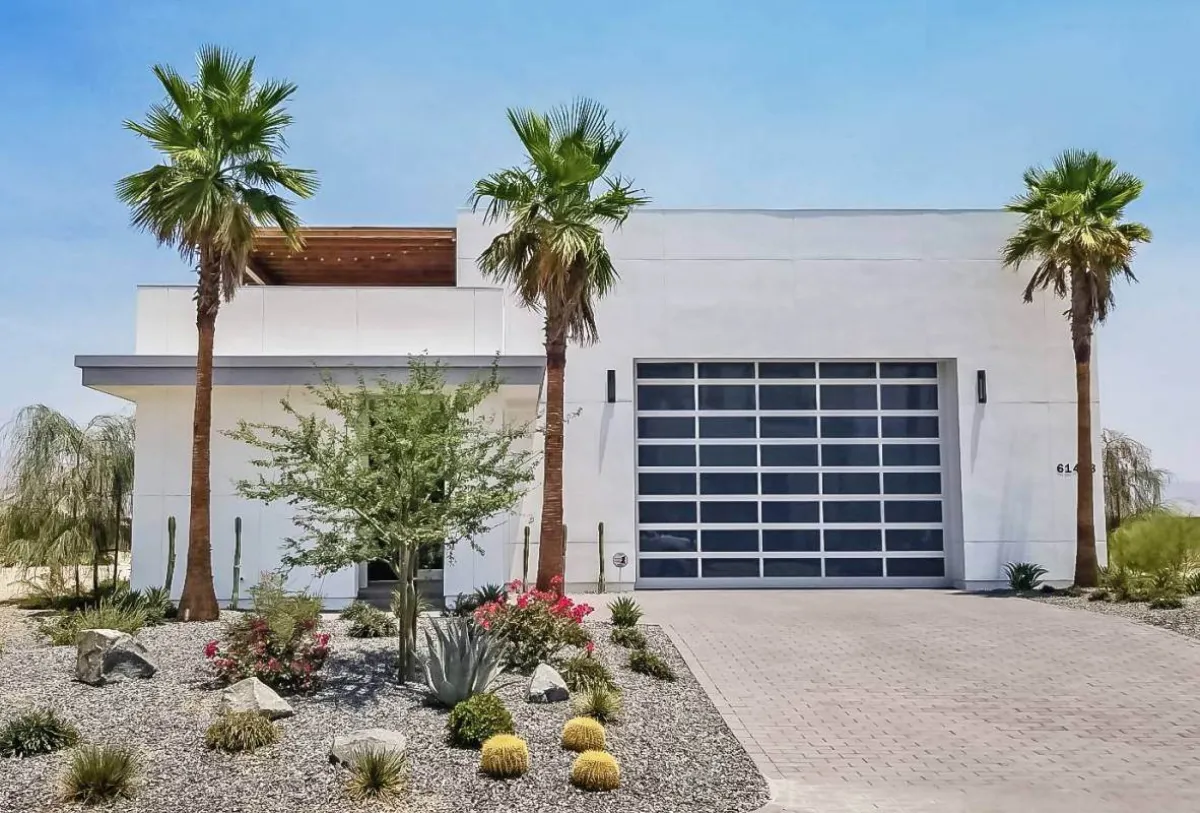
If I'm being honest? Steel. Nine times out of ten, for a Bend home, the answer is steel. I know that's not what people who are dreaming about a custom cedar door want to hear, but after ten years of installing garage doors in Central Oregon, it's the truth. Steel handles our climate better, lasts longer, costs less to own over time, and — here's the part that surprises people — modern steel doors look a whole lot better than you think.
But I'm not going to pretend wood doors don't exist, or that there's never a reason to choose one. There are situations where real wood is the right call. I've installed beautiful cedar carriage doors on custom homes in Awbrey Butte and Shevlin that genuinely made the house. So what I want to do here is lay out both sides — the steel case and the wood case — the way I'd explain it if you were standing in my shop looking at panel samples. And then I'll tell you about the third option that's kind of made the whole debate irrelevant for most of my customers.
Fair warning: this won't be balanced. I'm going to give steel more space because I think it deserves more space. If that bugs you, you're probably a wood-door person, and that's fine — just skip to the wood section and read what I have to say there. You might still change your mind.
The Case for Steel
Let me start with the boring reason, because it's actually the most important one: insulation.
Bend sits at 3,600 feet. We get mornings in January where it's negative five outside, and by the afternoon it might be thirty-five. That's a forty-degree swing in a single day, and it happens routinely. In the summer, you'll wake up to forty-five degrees and by three o'clock it's ninety-five. Your garage door is the single largest moving piece of your home's envelope. If it's not insulated properly, all that thermal chaos bleeds right into your house — especially if your garage is attached, which most of them are around here.
Modern insulated steel doors use a polyurethane foam core that's injected between two steel skins. The foam expands and bonds to both layers, creating a single rigid panel with no air gaps. You get R-values in the R-16 to R-18 range with a standard two-inch panel. That matters here. I've had customers tell me they can feel the difference in their hallway the day after we swap out an old uninsulated door for a polyurethane steel one. The garage goes from a freezer to something actually usable in winter, and their furnace stops running constantly to compensate.
There's also polystyrene — the white foam board you'd recognize from a shipping box. It's cheaper. R-6 to R-9 for the same panel thickness. And here's the thing I've noticed specific to our area: polystyrene can shrink in sustained cold. Not a lot, but enough to create hairline gaps between the foam and the steel. Those gaps kill your insulation performance right when you need it most, in the dead of a Bend winter. I steer every customer toward polyurethane. The cost difference is not that big and the performance difference is massive.
It Doesn't Need Anything From You
This is really the heart of the argument. A quality insulated steel door needs almost nothing. Soap and water once a year to wash off the pine pollen. Lubricate your rollers and hinges. That's it. Thirty minutes, done, see you next year.
Steel doesn't warp when the humidity drops to single digits in August. Doesn't crack when the temperature falls fifty degrees overnight. Doesn't absorb moisture during snowmelt and then split when things freeze again. In a climate that absolutely punishes organic materials — and Bend's high-desert climate is punishing, more than people who just moved here realize — steel just sits there and takes it. Year after year.
I think about this every time I do a service call on an old wood door that's been neglected. I was out at a place in Terebonne last spring where the homeowner had a gorgeous hemlock door — maybe eight years old. The bottom two panels were soft. Not just surface damage. The wood was coming apart because moisture had gotten in at the base, frozen and thawed through three or four winters, and basically turned the fibers to mush. That's a door replacement, not a repair. If that had been steel, it'd still be going strong at fifteen or twenty years old with zero maintenance.
Steel Looks Better Than You Think
Here's where I have to push back on the assumption that steel means industrial or generic. Because that hasn't been true for at least a decade.
Today's steel doors come in raised panel, recessed panel, flush, long panel, and full carriage house styles. The wood-grain textures are embossed into the steel and they're genuinely convincing from ten feet away. Color options go way beyond white and almond — charcoal, matte black, dark walnut, slate, custom colors. We've installed steel doors in Broken Top and NorthWest Crossing that visitors assume are real wood. I've watched people walk up and touch the panels because they can't believe it's steel. That's not an exaggeration.
The style gap between steel and wood has narrowed so much in the last five years that for most homes — even nice ones — you'd be hard pressed to justify the premium and the maintenance burden of real wood purely on aesthetics. The only time I think real wood is clearly the better-looking option is on a true custom home where the architecture demands it. And even then, there's a cheat code I'll get to.
It Handles Our Temperature Swings Without Complaint
This is the one that doesn't show up in brochures but matters a lot in practice. Steel doesn't change dimensions with temperature. The door that fits perfectly against its weatherstripping in July fits exactly the same way in January. The gaps don't open up. The seals don't pull away. You don't get drafts creeping in around the edges.
Wood moves. That's its nature. Wood absorbs and releases moisture with the seasons, and it expands and contracts as the temperature swings. In a mild coastal climate, that movement is minor. In Bend, where you can get a fifty-degree daily temperature swing and the humidity jumps from single digits to forty percent after a rainstorm, the movement is enough to cause real problems. I've adjusted wood doors in October that were perfect in August — panels swelling, sections binding against each other, the door getting heavy for the opener. Then by February the same door has shrunk and gaps have opened up. It's a constant battle.
Lifespan: 20 to 30 Years
A properly installed insulated steel door will go twenty to thirty years in Bend's climate with nothing more than annual lubrication and the occasional wash. Manufacturer warranties run from ten years to lifetime depending on brand and model. Compare that to the fifteen to twenty years you'll get from wood — and only if you're religious about maintenance. More on that in a minute.
The Brands I Trust
I've installed doors from just about every manufacturer out there. Three brands earn my recommendation for Central Oregon:
- CHI Overhead Doors — This is our primary brand. The 2200 and 4200 series are the workhorses. CHI builds in the Midwest for harsh climates, and their fit, finish, and insulation quality is consistently excellent. I hold CHI Master Installer certification, which matters because it means we install to factory spec and the warranty is fully backed.
- Clopay — The largest residential garage door manufacturer in North America. Their Intellicore polyurethane insulation delivers outstanding R-values. We're an authorized Clopay dealer and install their products across Central Oregon.
- Amarr — A strong value option. The Stratton and Classica collections give you real polyurethane insulation and solid build quality at a more accessible price point. Excellent for new construction, rental properties, and homeowners who want genuine performance without the premium tier pricing.
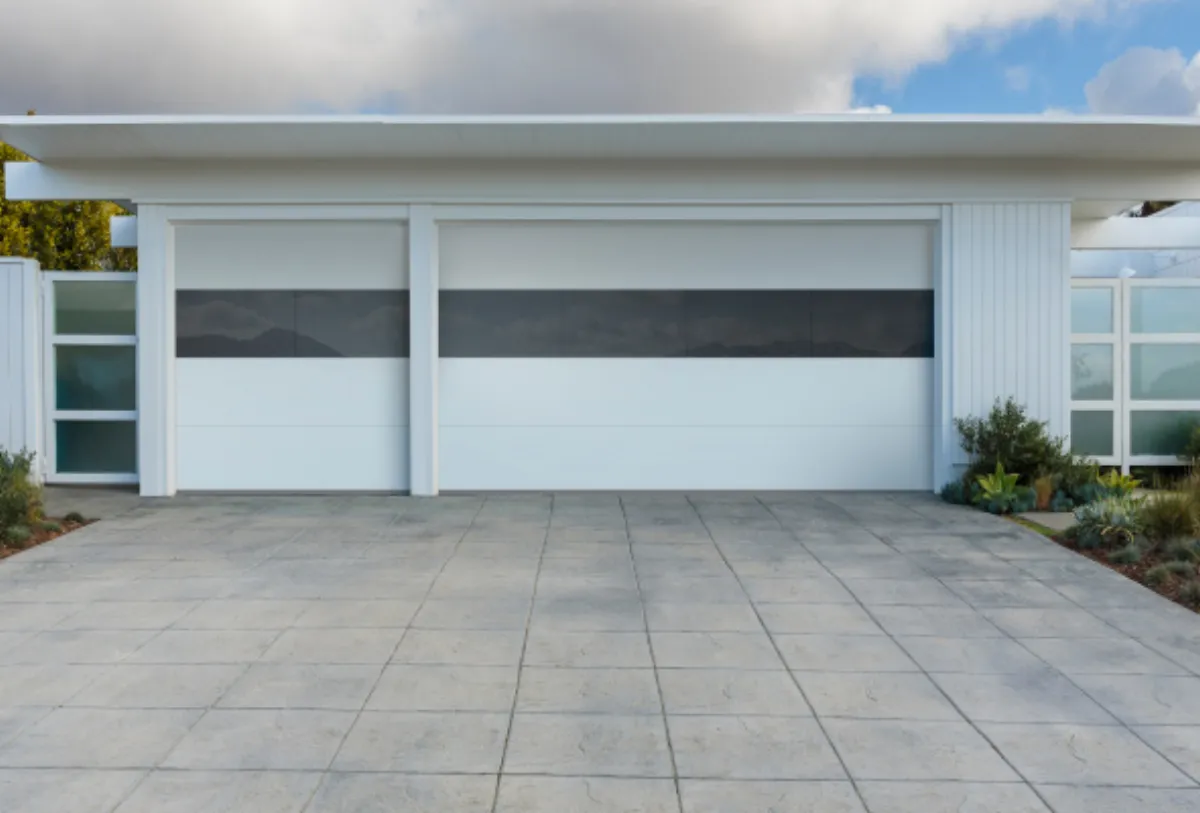
The Case for Wood (and When It Actually Makes Sense)
Alright, I've spent a lot of words championing steel. Now let me be fair to wood — because there genuinely are situations where it's the right choice, and I'd be doing you a disservice if I pretended otherwise.
A real wood garage door on the right house is beautiful in a way that steel can't perfectly replicate. I mean it. The depth of the grain, the way the stain catches light differently depending on the time of day, the warmth of the material — it carries an authenticity that resonates. When you're standing in front of a custom cedar carriage door on a lodge-style home in Shevlin, you feel something. It's architecture, not just a door. I've installed wood doors that made me step back and think, "Yeah, that's the right call for this house."
So when does wood make sense? When these three things are all true at the same time:
First, the house demands it architecturally. Some homes — particularly custom builds with extensive natural wood siding, timber framing, or a mountain lodge aesthetic — look incomplete with a steel door, even a good one. If your architect spec'd wood, there might be a good reason.
Second, you're committed to the maintenance. This is the non-negotiable part. A wood door in Bend needs refinishing every two to three years. That's sanding, cleaning, and fresh stain or sealant. A full day's project, or a professional refinisher's fee. You also need to keep the bottom seal in good shape and clear snow away from the base so moisture doesn't wick up into the panels. If you know you'll do this — or you'll hire someone to do it — wood can last. If there's any chance you'll let it slide, don't get a wood door. I'm dead serious about this.
Third, you're a full-time Bend resident. Second homes and vacation properties are terrible candidates for wood doors. Nobody's there to notice when the finish starts failing or when snowmelt sits against the bottom panel all day. By the time you come back for ski season, the damage is done.
What Happens When You Skip Maintenance
I need to tell this story because it illustrates the point better than any spec sheet.
Had a customer in Awbrey Butte who bought a beautiful hemlock door. Really gorgeous piece — custom built, stained a dark walnut, hardware that probably cost more than some people's entire door. Three years in, the bottom section was rotting because they didn't seal it on schedule. The UV had broken down the finish on the west-facing panels, moisture got in during fall rains, and then a cold snap in November froze the water inside the wood grain. By the time they called me, the bottom two panels were delaminating and the center stile was splitting. That's not a refinish. That's a panel replacement at best, a full door replacement at worst.
And here's the thing — they weren't neglectful people. They just got busy. Life happened. They meant to refinish it the previous summer and didn't get around to it. One missed cycle. That's all it took in our climate.
UV damage at 3,600 feet elevation is roughly twelve to fifteen percent more intense than at sea level. A south-facing or west-facing garage door catches afternoon sun for hours every day. Standard stains that last four or five years in Portland last maybe two here. And then there's the freeze-thaw issue — moisture gets into the grain, freezes, expands, creates micro-fractures. Those fractures let in more moisture next time. It's cumulative and it accelerates. By the time you see visible damage, the internal structure is already compromised.
Weight Is a Real Issue
One more practical consideration: wood doors are heavy. A standard 16x7 wood door runs four hundred to five hundred pounds. An equivalent insulated steel door is one-fifty to two hundred. That extra weight means heavier-duty springs under greater tension (which cost more and are more dangerous when they fail), a beefier opener (three-quarter to one horsepower instead of half), and reinforced tracks and hardware throughout. It's not just the door cost — it's the entire system that goes with it.
Species That Work Best Here
If you are going wood, species selection matters enormously:
- Western Red Cedar — My top recommendation. Natural oils resist rot and insects. Dimensionally stable compared to most species. Takes stain beautifully. Weathers to silver-gray if you prefer a natural patina. This is the best-performing wood for Bend's conditions, full stop.
- Redwood — Similar durability to cedar with a richer, deeper color. Harder to source in the large clear boards you need for door panels, and more expensive. But for a high-end custom build, it's worth it.
- Hemlock and Douglas Fir — Less expensive but they lack the natural rot resistance of cedar and redwood. More maintenance, shorter lifespan. I generally steer people away from these for garage doors unless budget is the primary constraint. That Awbrey Butte story I told? Hemlock.
The Cheat Code: Wood-Look Steel
This is the part where I tell you there's a third option that makes the whole debate kind of irrelevant.
Over the past several years, wood-look steel doors have gone from a niche product to the fastest-growing segment of our installations. And honestly? It's because they've gotten so good that the argument between steel and wood has become academic for most homeowners. You get the look of wood with the performance of steel. That's not marketing language — that's what's actually happening on the ground.
Here's how they work. You start with the same polyurethane-insulated steel sandwich I described earlier — two steel skins, foam core, R-16 to R-18. Then the exterior face gets either a composite overlay shaped and textured to look like wood planks, or an embossed surface with a high-definition wood-grain print. The good ones — and there are legitimately good ones now — are remarkably convincing. I've had people in the industry do a double-take.
The Doors I Install Most
- CHI Overlay Carriage House (5200 series) — This is our most-installed wood-look door by a wide margin. Real composite overlays applied to an insulated steel base create depth and shadow lines that look like true board-and-batten construction. Available in walnut, cedar, mahogany, slate, and more. The 5216 and 5283 models with R-16 polyurethane are the sweet spot. Lifetime limited warranty on the steel sections, five years on the finish. I put these on probably two out of every five installations we do in Bend's nicer neighborhoods.
- Clopay Canyon Ridge Collection — Faux wood composite exterior over an insulated steel frame. The Ultra-Grain finish is the most realistic wood-grain texture in the business, and it holds up to Bend's UV far better than real wood stain. I've got Canyon Ridge doors I installed seven, eight years ago that still look fantastic with nothing more than an occasional wash. This is one of the most popular doors in Broken Top and Awbrey Glen — and there's a reason for that.
- Amarr Classica — More budget-friendly with decorative overlays and wood-grain finishes. Not quite as convincing as CHI or Clopay up close, but from the curb it looks great. Same polyurethane insulation, same durability.
Why the Premium Neighborhoods Have Figured This Out
Drive through Broken Top sometime and pay attention to the garage doors. Or NorthWest Crossing. Or Tetherow. A huge percentage of those homes have wood-look steel doors. These are neighborhoods where people care deeply about how their home looks — and they're choosing steel with a wood finish because it satisfies the aesthetic and the HOA requirements without creating a maintenance obligation that eats a weekend every two years.
I've worked with architectural review committees at most of Bend's planned communities. Wood-look steel qualifies under virtually every set of CC&Rs I've encountered. The earth tones, the carriage house styles, the textured finishes — they check every box. If your HOA requires "wood-tone" or "carriage-house style," these doors are the answer.
And here's the part that I find kind of funny: some of the most beautiful "wood" doors in Bend's most expensive neighborhoods are steel. The homeowners know it, and they love it, because they're not spending their Saturday sanding and staining. They're out on the trails or at the brewery. That's the Bend lifestyle, and a maintenance-free door fits it better than a high-maintenance one.
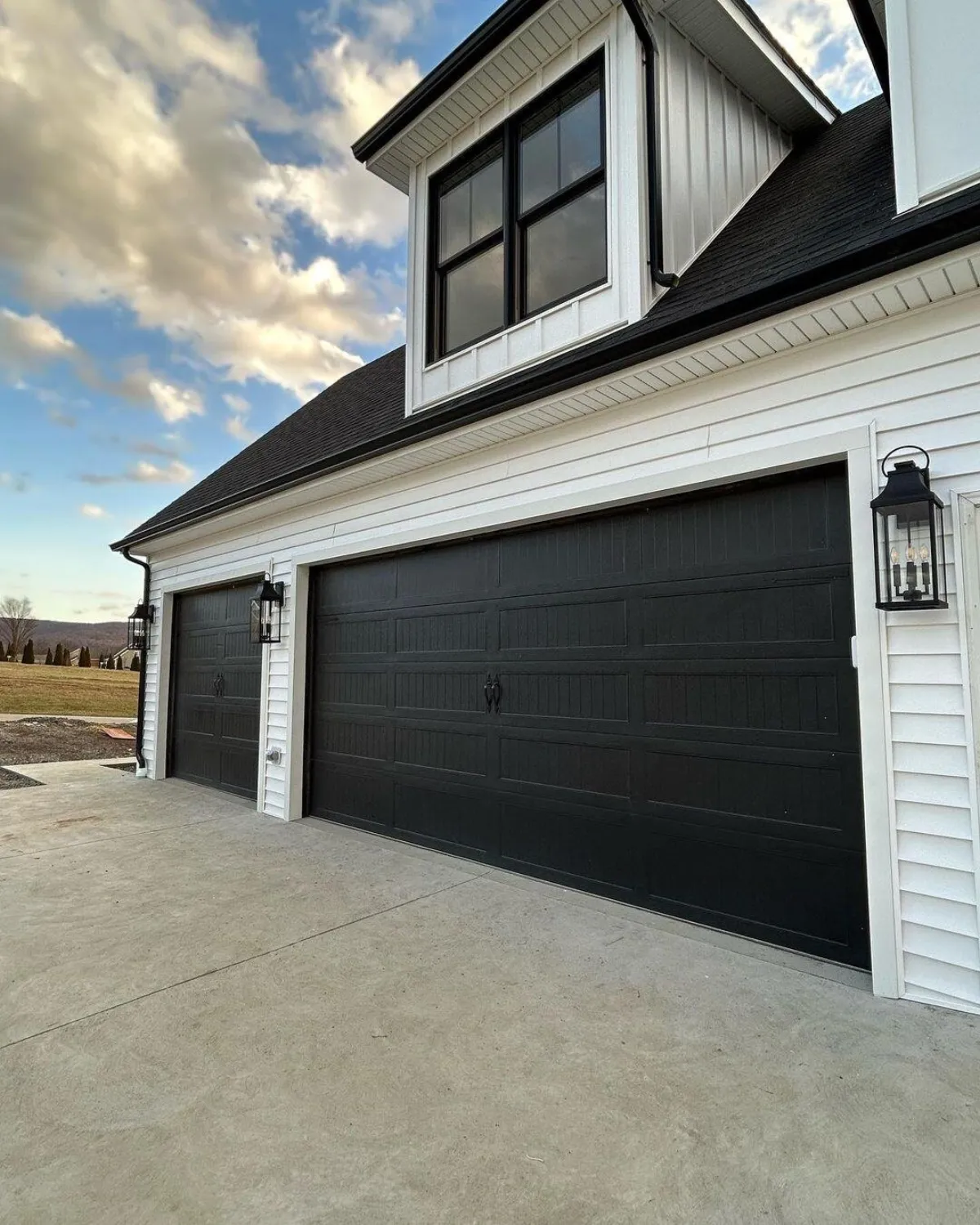
The Comparison, If You Want the Numbers
I've been making the argument, now here's the evidence. Side by side, for people who like to see things in a table:
| Feature | Insulated Steel | Real Wood |
|---|---|---|
| Insulation (R-value) | R-6 to R-18+ | R-4 to R-8 (varies by thickness) |
| Maintenance | Minimal — wash and lubricate yearly | High — refinish every 2-3 years |
| Lifespan | 20-30 years | 15-20 years (with diligent maintenance) |
| Cost | Call for pricing — moderate to mid-range | Call for pricing — premium |
| Weight | Moderate (150-250 lbs typical) | Heavy (300-500 lbs typical) |
| Climate Suitability (Bend) | Excellent — handles all conditions | Fair — vulnerable to UV and moisture |
| Best For | Most Bend homes, workshops, attached garages | Custom/luxury homes where aesthetics are the priority |
Look at that chart and tell me the choice isn't obvious for ninety percent of situations. Steel wins on insulation, maintenance, lifespan, weight, and climate suitability. Wood wins on one thing: it's real wood. And with wood-look steel closing that gap to the point where most people can't tell the difference from the driveway, even that advantage has gotten thinner.
So What Should You Actually Do?
I'm going to break this down by situation, because "it depends" is a cop-out answer even when it's technically true.
You live in your Bend home full-time and your garage is attached: Insulated steel, R-16 or higher, polyurethane core. This covers probably seventy percent of our installations. It's not the exciting answer, but it's the right one. You'll save on energy costs, you'll never think about maintenance, and in twenty years the door will still be working perfectly.
You have a custom or luxury home in one of Bend's upscale neighborhoods: Wood-look steel — specifically a CHI 5200 series or Clopay Canyon Ridge. You get the curb appeal that matches your home's architecture, the HOA compliance, and zero maintenance headaches. If you're absolutely set on real wood and you understand the commitment, go Western Red Cedar and budget for professional refinishing every two to three years.
You have a detached shop or workshop: Basic insulated steel, R-9 to R-13. Keeps the space usable in winter with a heater, handles the inevitable bumps and scrapes of a work environment. CHI 2200 series or Amarr Stratton.
You have a second home or vacation property in Bend: Steel. End of discussion. A wood door sitting unattended through a Bend winter — nobody clearing snow from the base, nobody noticing the finish failing, nobody catching the early signs of moisture damage — will fall apart faster than you'd believe. Steel doesn't care if you're gone for three months. It'll look exactly the same when you come back.
You're in an HOA community: Carriage house-style steel doors in an earth-tone or wood-grain finish. Satisfies virtually every architectural guideline I've seen in Bend. We've worked with the review committees at most of the planned communities around here and can recommend options specific to your CC&Rs.
My Final Word on This
I've been going back and forth on this in my head for years, and I keep landing in the same place. For the vast majority of homeowners in Bend, steel is the correct choice and it's not particularly close. The insulation is better. The maintenance is essentially zero. The lifespan is longer. The total cost of ownership over twenty years isn't even comparable.
Wood is beautiful, and I will never stop admiring a well-maintained cedar door on the right house. But "well-maintained" is doing a lot of heavy lifting in that sentence. Most people don't maintain them well. Not because they're lazy — because life gets in the way. And when you miss a cycle in this climate, the consequences come fast.
The wood-look steel option has made this debate easier. For the homeowner who wants the look of wood without the lifestyle of a wood-door owner, it's the obvious answer. And the technology has gotten good enough that "compromise" isn't even the right word anymore. These doors look great. They perform great. They last.
The best way to decide is to see the options in person. I keep panel samples at the shop — steel, wood-look steel, real wood — and I'm happy to walk through the pros and cons for your particular home and situation. No pressure, no upselling. Just an honest conversation from someone who's installed hundreds of these doors in the same climate where you live.
Want help choosing the right door? Call us at 541-203-7676 for a free consultation. Learn more about our garage door installation services or explore custom garage door options for your home.
Tyler and Ashley Ottesen own Brokentop Garage Doors, a licensed Oregon garage door contractor (CCB #209697) serving Central Oregon since 2016. Tyler is a CHI Master Installer and LiftMaster Certified Installer with over a decade of experience in residential and commercial garage door systems.