Most garage doors get zero maintenance. Like, literally none. People buy a house, the door works, and they never think about it again until something breaks. I get it — it's a garage door, not a sports car. But here's the thing that kills me: an hour of boring work once a year could save you hundreds of dollars and a really inconvenient Monday morning. I've been doing this since 2016 and the pattern is always the same. Somebody calls with a broken spring or a door that jumped its track, and I ask when the last time they had it serviced was, and they say "...never?" with this sheepish little uptick in their voice. I can't even be mad. Nobody teaches you this stuff. Your realtor didn't mention it. Your home inspector spent about forty-five seconds on the garage door. And the builder who installed it probably handed you a manual that went straight into the junk drawer.
So here's the deal. I'm going to give you the same checklist my guys use when we go out on maintenance calls. But I'm going to be honest about each item — which ones matter a lot, which ones are quick, and which ones you should absolutely not attempt unless you want to end up in an urgent care waiting room with a story that starts "Well, I watched a YouTube video..."
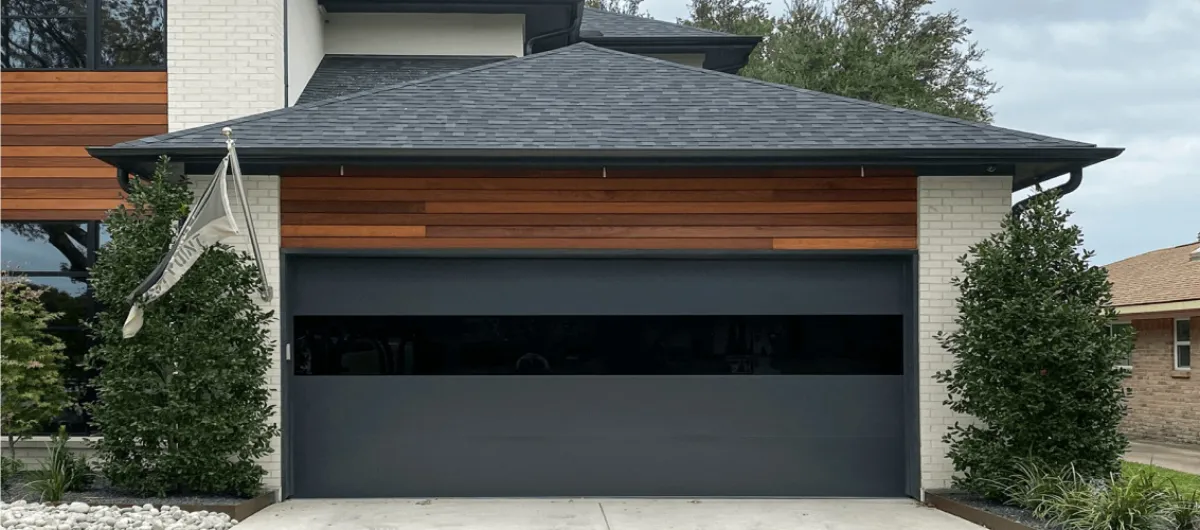
I'm not going to pretend maintenance is exciting. It's not. It takes about an hour and it's boring. But boring is better than broken.
The Stuff You Can Do Yourself
This is the bulk of the checklist, and most of it is easy. Some items take thirty seconds, some take ten minutes. I'll tell you which is which.
Look at your springs. Stand inside the garage, door closed, and look up. You'll see one or two tightly wound coils on a bar above the door. You're looking for gaps in the coils (that means it already broke — yes, you'd know, there would have been a loud bang), rust that's more than surface-level, or uneven spacing between the coils. This takes about fifteen seconds and it could save you from a surprise failure. If anything looks off, call somebody. Don't touch the springs. Just look.
Listen to the door. Open and close it once while you're standing in the garage. Actually listen to it — don't be scrolling your phone. A healthy door sounds smooth and consistent. New grinding means bad rollers or dirty tracks. Squealing means something's dry. Popping or snapping could be a spring or cable problem. Rattling is loose hardware. Your ears are genuinely the best diagnostic tool you've got, and this takes about ten seconds.
Test the auto-reverse. This one matters. Lay a 2x4 flat on the ground in the path of the door and hit close. The door should hit the board and immediately reverse back up. If it doesn't — or if it pushes down hard on the board before reversing — the force settings on your opener need adjustment. A door that doesn't auto-reverse is genuinely dangerous, especially if you have kids or dogs anywhere near the garage. If this test fails, stop using the automatic opener until you get it fixed. I'm serious about that one.
Check the photo-eye sensors. Those two little gadgets at the bottom of your door tracks, about six inches off the floor. Each one has a light. If both lights are solid, you're good. If one's blinking, the sensors are misaligned or dirty. Wipe them with a dry cloth. In Central Oregon, spider webs are the number one culprit — I cannot overstate how much spiders love building homes across photo-eye lenses. Every August my phone rings off the hook with "my door won't close" calls and nine times out of ten it's a spider web on the sensor.
Check weather seals. Bottom seal, side seals, header seal at the top. Look for cracking, gaps, sections pulling away. This is especially important in Bend because our UV at 3,600 feet eats rubber faster than most places, and the constant freeze-thaw cycling doesn't help. A bad seal lets in cold air, moisture, dust, mice, and whatever else decides your garage looks inviting. Replacing seals is cheap and easy — one of the best bang-for-your-buck maintenance items on this list.
Lubricate the moving parts. Okay, this one gets a few more sentences because people screw it up constantly. Use white lithium grease — not WD-40. WD-40 is a solvent, not a lubricant. I've had this conversation probably 500 times. Hit the springs along their full length, the hinge pivot points, and the roller bearings (unless you have sealed nylon rollers, which don't need it). Also grease the bearing plates on either end of the spring shaft.
Here's the part most people get wrong: do NOT grease the tracks. I know it seems logical. It's not. Greasy tracks collect dust and grit that turns into an abrasive paste. You're actually accelerating wear on your rollers. Tracks should be clean and dry. Wipe them down with a rag and leave them alone.
That white lithium grease I mentioned? It thickens below 20 degrees. Switch to silicone-based in October. Silicone spray works down to about negative 20, which covers the worst of what Bend throws at us. Your springs and rollers need to move freely when it's five degrees outside, not fight through congealed grease.
Tighten the hardware. Grab a socket wrench. Your door vibrates 1,500 times a year, minimum — every open, every close. That loosens bolts. Check the track mounting brackets, hinge bolts, roller brackets, and the bracket where the opener arm connects to the door. Snug is the goal. Don't crank them down like you're assembling an engine. Over-tightening strips threads and can crack panels. Five minutes, tops.
Look at the cables. The lift cables run from the bottom bracket on each side of the door up to the drums on the spring shaft. You're looking for fraying, unraveling, or kinking. This is a look-don't-touch situation — those cables are under serious tension, and if one's already damaged, messing with it could cause it to snap. Any fraying at all means it's time for a professional replacement. This is not something you fix with duct tape and optimism.
Clean the tracks. Inside of both vertical tracks and the curved sections. Rag, wipe, done. Central Oregon's volcanic dust and pine needles accumulate in there faster than you'd think, especially if you leave the door open in summer. Thirty seconds per track.
Test the balance. This is the most important single test on this list and most people have never done it. Pull the emergency release handle — the red cord hanging from the opener rail — to disconnect the opener. Lift the door manually to about waist height and let go. A balanced door stays put. Just floats there. If it drops back down, your springs are losing tension. If it shoots up, they have too much. Either way, the door is out of balance, your opener is working overtime to compensate, and your springs are wearing unevenly. Note the result and reconnect the opener. But don't try to fix the balance yourself — that requires adjusting spring tension, which brings us to the next section.
The Stuff You Shouldn't Touch
I need you to hear this part. I'm not saying it to drum up business. I'm saying it because I've seen what happens when people don't listen.
Spring tension adjustment. This is the line. No flexibility, no exceptions, no "but I'm pretty handy." Torsion springs store an enormous amount of energy. We're talking hundreds of pounds of force wound up in a steel coil. The winding bars used to adjust them can slip. When they do, the bar becomes a projectile, or the spring unwinds in a fraction of a second and whatever's in the path — usually a hand, an arm, a face — takes the hit. Every year, DIY spring adjustments send people to the emergency room. Some of them don't make it to the emergency room.
I've been called out to clean up after DIY spring attempts. Bent winding cones. Stripped bolts. Doors dropped off their tracks because someone thought they could "just adjust it a little." One guy in Redmond had the winding bar kick out and put a hole through the drywall behind him. If it had hit him in the head instead of the wall, we'd be having a very different conversation. Spring work is professional-only. Full stop. I will die on this hill.
Cable replacement. Cables are part of the spring system. Replacing one means releasing and reapplying spring tension, which puts us right back in the territory I just described. Same rule applies.
Bottom bracket removal. That bracket at the very bottom of the door on each side is where the cable attaches. It's under spring tension. I've seen people try to swap rollers by removing this bracket and suddenly they've got a cable whipping around under a couple hundred pounds of force. Leave the bottom brackets alone. Every other roller on the door you can replace yourself if you're handy — just not the bottom ones.
Track repositioning. If your tracks are misaligned and the door is binding, don't try to loosen the mounting bolts and shift things around. Tracks hold the door in place under gravity. Loosening one at the wrong time can let the door shift, drop, or come out of the track entirely. A 250-pound door falling sideways out of its track is not something you can catch. We use levels, straight-edges, and clamps when we do track alignment, and even then it requires paying attention.
That's the list of things I won't let my own family do. Everything else — go for it. But these four? Call a professional. Call us, call someone else, I don't care. Just don't do it yourself.
Is It Worth Paying Someone?
Fair question. If you can do most of this yourself, why pay for a tune-up?
Because there's a gap between what you can do and what catches problems. You can lubricate, tighten, clean, and test. That handles maybe 60% of what a maintenance visit covers. The other 40% is the stuff that requires a trained set of eyes and hands — and that's usually the stuff that prevents the expensive failures.
Here's what happens during an annual professional tune-up that you can't do safely or effectively on your own:
Spring tension calibration. We use calibrated winding bars to set the tension precisely for your specific door weight and balance point. Too much tension and the door flies open (safety hazard). Too little and the opener strains against the load (shortens its life and the spring's life). Getting this right requires knowing the spring's wire gauge, the drum diameter, the door weight, and how all of those interact. It's not guesswork — it's math and experience and very carefully controlled force.
Close-up spring inspection. From the ground, you can see obvious damage. Up close, our guys check for hairline cracks in the wire that aren't visible from six feet away. We measure for elongation. We check the winding cones for looseness. We estimate remaining cycle life based on wire gauge, coil diameter, and age. Catching a spring at 85% of its life means you schedule a replacement at your convenience on a Tuesday afternoon instead of calling us in a panic on a Saturday morning when it's twelve degrees out.
Opener force calibration. Your opener has force settings that control how hard the motor pushes and pulls. Too much force and the auto-reverse won't work properly. Too little and the door won't close reliably in cold weather, when lubricant thickens and seals stiffen. We set these precisely for your door, in the conditions it's actually operating in. You can adjust these yourself — there are screws on the back of the opener, and your manual tells you which ones — but most people adjust them wrong and then the auto-reverse stops working correctly, which is a safety problem. If you want to try it, go slow, make tiny adjustments, and re-test the auto-reverse after each one.
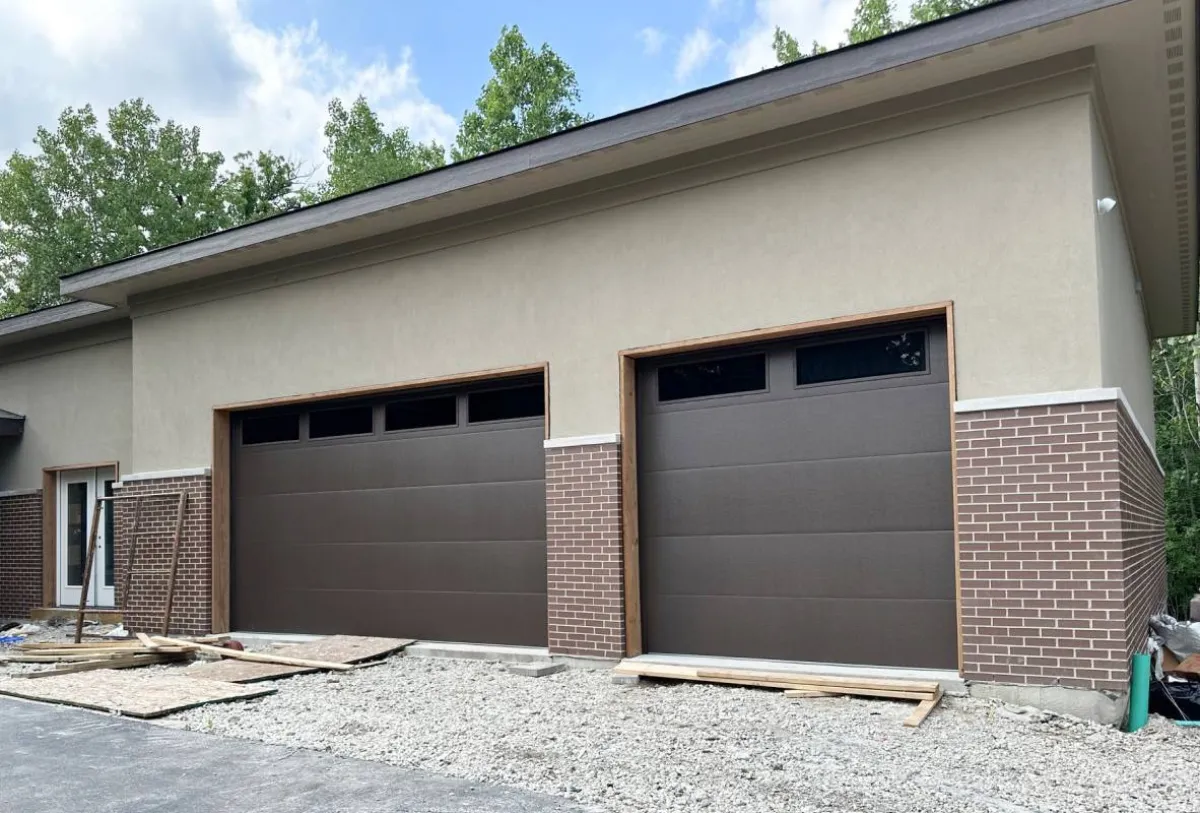
Full safety system test. We go beyond the 2x4 test. Force-gauge measurement of the auto-reverse mechanism. Sensor alignment verification. Remote and wall-button testing. Emergency release operation test. Verification against current UL 325 safety standards. This is the stuff your insurance company cares about if something ever goes wrong.
Track alignment. We check both vertical and horizontal tracks with levels and straight-edges. Even slight misalignment causes uneven roller wear, puts stress on hinges, and makes the opener work harder. Fixing alignment problems early means everything downstream — rollers, hinges, opener motor — lasts longer.
Roller inspection and replacement. Steel rollers last about 5 to 7 years. Nylon lasts 10 to 12. We check every roller during a tune-up and swap out any that are chipped, cracked, or seized. If you're still on the original steel rollers, we'll probably recommend upgrading to nylon — they're quieter, smoother, and they don't need lubrication. Worth the upgrade every time.
Written condition report. After every visit, you get a written assessment of every major component — springs, cables, rollers, tracks, panels, opener, sensors, seals. What we found, what we did, what we recommend you plan for. This is how you budget for maintenance instead of getting blindsided by an emergency. It takes the guesswork out of owning a garage door.
So what does all this cost? A professional tune-up runs $100 to $175, depending on the condition of the door and whether any parts need replacing. $150 for a tune-up now vs $450 for a spring replacement later. The math is pretty simple. Most of our long-term maintenance customers have been with us for years, schedule their tune-up every fall, and almost never call for emergency service. Their doors run quietly, they last longer, and they cost less over their lifetime. That's the whole point.
I'm going to throw in some Central Oregon-specific stuff here because national maintenance guides are written for places where it's 60 degrees year-round and nothing interesting happens to garage doors.
October checklist — do this before winter. Switch your lubricant to silicone-based (already covered that). Inspect all seals before the snow hits — once snow piles against the bottom of the door, a failed seal lets meltwater seep in and refreeze on your garage floor. Test your battery backup if your opener has one. Power goes out regularly during Central Oregon winter storms, and a dead backup means you're either stuck inside or manually lifting a heavy door in the dark at ten below. And schedule your annual tune-up — fall is the ideal window because cold makes metal brittle and springs are more likely to snap in winter. Get ahead of it.
April checklist — post-winter assessment. Check for frost heave damage. Frost heave can shift the concrete slab your tracks are anchored to, throwing alignment off. If your door is suddenly binding or making new noises in spring, that's probably why. Clean salt and ice melt residue from tracks — salt corrodes steel rollers and hardware. Check your bottom seal for ice damage. Freezing and thawing at the base of the door can tear, stretch, or permanently flatten the astragal. If daylight's coming through, bugs and dust are right behind it.
Summer note. At our elevation, UV radiation is 12 to 15 percent stronger than at sea level. South-facing and west-facing garage doors take an absolute beating from June through September. UV degrades rubber and vinyl seals faster up here. Check seals more often during summer, especially if your door faces the afternoon sun. Also look at the exterior finish — fading, chalking, and cracking show up faster at 3,600 feet.
After any big wind event. We get serious wind in Central Oregon — sustained 30 to 40 mph with gusts past 60, multiple times a year, especially spring and fall. After a wind event, check your track anchors and mounting brackets. High winds put lateral force on the door that loosens bolts and shifts bracket positions. Also look at the panels for bowing or warping. If the door looks slightly different than it used to, it might be.
Last thing: when to call. Not for maintenance — for repair. There are warning signs that mean your door has moved past "maintenance" territory into "something needs fixing."
Spring with a visible gap? Already broken or failing. Call now, not later. Door taking noticeably longer to open than it used to? Springs are losing tension and the opener is compensating — working harder than it was designed to, which wears it out faster too. Opener sounds like it's straining, running hot, or stalling mid-cycle? Door's probably out of balance. A balanced door takes almost no effort for the opener to move — the springs do the real work. If the motor's struggling, the springs aren't holding up their end. Any visible cable fraying? Immediate replacement. Cables don't heal. Once the strands start separating, it's a countdown to a snap. Daylight visible under the door? Seal needs replacing. New bottom astragal and weatherstrip fixes that and keeps your garage clean, dry, and insulated.
Any of those? Call us for a proper diagnosis. We'll tell you straight whether it's a quick fix or something bigger.
Call us in the fall. Seriously — October is the perfect time. Before winter hits and before we get slammed with broken spring calls. Every November and December we're booked solid with people whose springs gave out in the first hard freeze, and every single one of them says the same thing: "I should have had it looked at sooner." Be the person who had it looked at sooner.
Call Brokentop Garage Doors at 541-203-7676 to schedule your annual garage door tune-up. We serve all of Central Oregon — Bend, Redmond, Sisters, Sunriver, La Pine, Prineville, Tumalo, Terrebonne, and everywhere in between. If you're not sure whether your door needs maintenance or repair, we'll figure it out when we get there. Straight answers, no pressure.
Tyler and Ashley Ottesen own Brokentop Garage Doors, a licensed Oregon contractor (CCB #209697) serving Central Oregon since 2016. Tyler is a CHI Master Installer and LiftMaster Certified Installer with over a decade of hands-on experience in residential and commercial garage door systems.