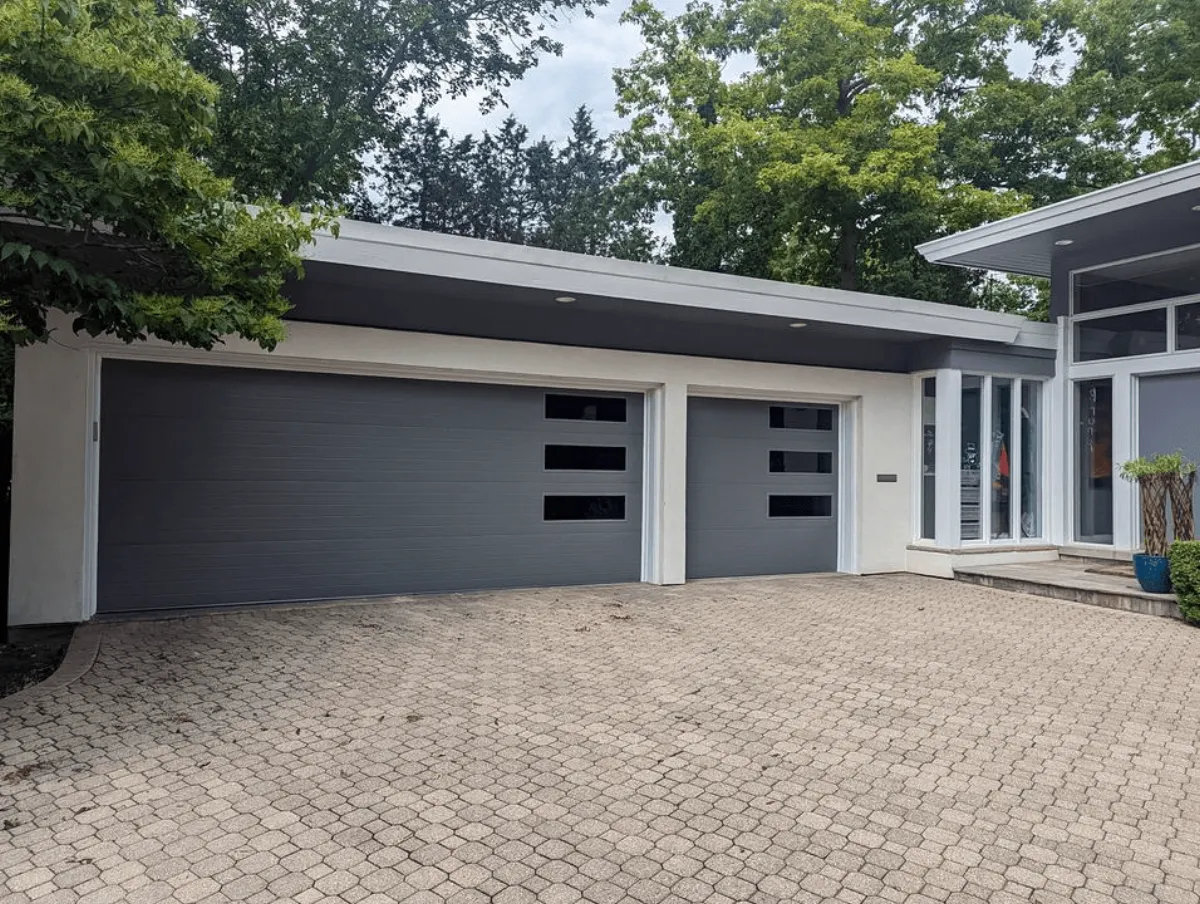
Your garage door is one of the largest and heaviest moving objects in your home. A standard two-car garage door weighs between 150 and 250 pounds, and it moves up and down thousands of times per year on a system of springs, cables, and mechanical components under significant tension. Modern safety features have dramatically reduced garage door injuries compared to decades past, but they only work if they are properly installed, correctly maintained, and regularly tested.
As a licensed garage door contractor (CCB #209697) serving Central Oregon since 2016, I want every homeowner to understand the safety features built into their garage door system, know how to test them, and recognize when something is not working correctly. This knowledge genuinely saves lives and prevents injuries.
Required Safety Features
Federal law (specifically the Consumer Product Safety Improvement Act and UL 325 standard) requires that all garage door openers sold in the United States include certain safety features. If your opener was manufactured after 1993, it should have all of these. If it predates 1993, replacing the opener is one of the most important safety upgrades you can make for your home.
Photo-Eye Sensors (Infrared Safety Beams)
Required since 1993, photo-eye sensors are mounted on each side of the garage door opening, about 6 inches above the floor. One sensor transmits an infrared beam, and the other receives it. If anything breaks the beam while the door is closing — a child, a pet, a bicycle, a car bumper — the door immediately stops and reverses direction.
How to test: While the door is open, press the button to close it. While the door is moving downward, break the beam by waving your foot or a broom handle through the sensor path. The door should stop and reverse immediately. If it continues closing, the sensors are malfunctioning and the opener should not be used until the issue is resolved.
Common sensor problems we see in Central Oregon:
- Misalignment: Vibration, accidental bumps, or settling can shift sensor positions. Most sensors have indicator lights — a steady light means the sensor is aligned and receiving the signal, while a blinking light indicates it is not receiving. Adjust the sensors until both lights are steady.
- Dirty lenses: Dust, cobwebs, and moisture (including morning frost common in Bend) can block or scatter the beam. Clean both lenses with a soft dry cloth monthly.
- Sun interference: Direct sunlight hitting a sensor can overwhelm the infrared signal. This is particularly common with west-facing garages during late afternoon. A small shade or cardboard tube around the receiving sensor often solves this.
- Wiring damage: The low-voltage wires running from the sensors to the opener can be damaged by mice, lawn equipment, or normal wear. Check the wires visually for cuts, nicks, or loose connections.
Auto-Reverse Mechanism (Mechanical Force Sensor)
Independent of the photo-eye sensors, every modern opener has a mechanical force sensor that detects resistance when the door is closing. If the door touches an object — or encounters any unusual resistance — it should stop and reverse immediately. This is a backup safety system in case the photo-eye sensors fail or miss an obstruction.
How to test: Place a 2x4 flat on the ground directly in the center of the door opening. Close the door using the opener. When the door contacts the 2x4, it should reverse within two seconds. If the door continues pressing against the board, the close force is set too high and needs adjustment. Most openers have close-force adjustment screws on the back or side of the motor unit.
An important note for Central Oregon homeowners: Cold weather increases friction in the track and rollers, which can require a slight increase in close force to operate the door. However, this setting should be kept as low as possible while still allowing reliable closing. If you increase the force setting for winter, test the auto-reverse frequently to make sure it is still responsive. And reduce it again in spring.
Manual Release (Emergency Disconnect)
The red cord hanging from the opener trolley (the carriage that rides along the rail) is the emergency release. Pulling it disconnects the door from the opener, allowing you to operate the door manually. This is essential during power outages, which happen regularly in Central Oregon during winter storms.
How to use it:
- Pull the red handle straight down and toward the motor unit. You will feel and hear the trolley disconnect.
- Lift the door manually. A properly balanced door should lift smoothly with about 10 pounds of force.
- To reconnect, pull the handle toward the door (away from the motor), then activate the opener. The trolley will re-engage automatically.
Practice using the emergency release before you need it. During a power outage at night, in a cold dark garage, is not the time to figure out how it works. I recommend every household member who drives practice disconnecting and reconnecting the opener at least once.
Safety warning: Never use the emergency release when the door is in the open position unless the springs are working correctly. If a spring is broken, the door is extremely heavy and will drop when disconnected from the opener. Only use the emergency release with the door closed, or if you are confident the springs are intact and the door is balanced.
Spring Safety Features
Safety Cables on Extension Springs
If your garage door uses extension springs (the springs that run along the horizontal tracks on each side), they should have safety cables threaded through them. These cables are anchored at each end and prevent the spring from becoming a projectile if it breaks. An extension spring that breaks without a safety cable can whip across the garage with enough force to go through drywall or a car windshield.
If your extension springs do not have safety cables, this should be corrected immediately. It is an inexpensive safety upgrade that could prevent a serious injury.
Containment on Torsion Springs
Torsion springs (mounted on a shaft above the door opening) are inherently more contained than extension springs because they are mounted on a fixed shaft. When a torsion spring breaks, it usually stays on the shaft rather than flying across the garage. This is one of the safety advantages of torsion spring systems and is part of why we recommend them over extension springs.
Door Panel and Hardware Safety
Pinch-Resistant Panels
Modern garage door panels are designed with flush joints or contoured edges that prevent fingers from getting caught between panels as the door moves. Older doors with flat panel joints create a gap that closes as the door bends around the track curve — a significant pinch hazard, especially for children who may grab the edge of a panel while the door is moving.
If your door is more than 15-20 years old, check whether the panel joints are flush or recessed. If there are exposed gaps between panels that close during operation, consider upgrading to a modern door with pinch-resistant panel design.
Tamper-Resistant Bottom Brackets
The bottom brackets on each side of the garage door connect the lift cables to the door. These brackets are under the full tension of the spring system and should never be adjusted or removed by anyone other than a trained technician. Modern doors use tamper-resistant brackets that are harder to remove accidentally, but the principle applies to all doors: leave the bottom brackets alone.
Opener Safety Features
Rolling Code Technology
Modern garage door remotes use rolling-code encryption that changes the access code with every use. This prevents code grabbing, where someone with a radio receiver captures your remote signal and uses it to open your door later. If your remote is more than 15 years old, it may use a fixed-code system that is vulnerable to this type of security breach. Upgrading to a current LiftMaster opener with Security+ 2.0 rolling-code technology eliminates this risk.
Timer-to-Close
Many modern openers, including the LiftMaster models we install, offer a timer-to-close feature that automatically closes the door after a set period if you forget. This prevents the all-too-common scenario of leaving for work with the garage door wide open. Before auto-closing, the opener will flash lights and sound a warning to alert anyone in the area.
Motion-Activated Lighting
Built-in lights that activate when the opener is used or when motion is detected in the garage improve visibility and safety. They also serve as a deterrent against unauthorized entry. In Central Oregon, where many garages double as workshops, recreation gear storage, and primary home entries, good lighting is a meaningful safety feature.
Safety Tips for Families with Children
Children are the most vulnerable to garage door injuries. Here are essential practices for families:
- Keep remotes out of reach: Garage door remotes are not toys. Mount the wall button at least 5 feet off the ground, and keep portable remotes where children cannot access them.
- Teach door safety: Children should understand that they should never play under or near a moving garage door, never try to race under a closing door, and never put their fingers between door panels.
- Never leave the door partially open: A partially open door can fall unexpectedly if a spring fails. It also invites children to try to duck under it.
- Supervise in the garage: Young children should never be in the garage unsupervised, particularly when the door is in operation.
- Test safety features monthly: Make testing the photo-eye sensors and auto-reverse a monthly habit. These are the systems that protect your children from a closing door.
When to Upgrade for Safety
Consider upgrading your garage door or opener if:
- Your opener was manufactured before 1993 and lacks photo-eye sensors
- The auto-reverse mechanism fails the 2x4 test
- Your extension springs do not have safety cables
- The door panels have exposed pinch points between sections
- Your remote uses fixed-code technology
- The emergency release does not work smoothly
Schedule a Professional Safety Inspection
At Brokentop Garage Doors, our safety inspection covers every item discussed in this article plus a thorough evaluation of springs, cables, tracks, and hardware condition. We test all safety systems, check balance, and identify potential issues before they become hazards.
Call us at 541-203-7676 to schedule a safety inspection for your garage door. We serve Bend, Redmond, Sisters, Sunriver, La Pine, Prineville, Tumalo, Terrebonne, and Powell Butte. As a licensed contractor (CCB #209697) with over 630 five-star Google reviews, we are committed to keeping Central Oregon families safe.
Related Resources
Learn more about keeping your garage door safe and well-maintained:
- Emergency Garage Door Repair Guide — what to do when safety features fail or the door malfunctions
- Annual Maintenance Checklist — regular maintenance keeps safety features working properly
- Spring Replacement Guide — broken springs are a serious safety hazard
- Garage Door Won't Close? 8 Causes — safety sensors are the most common reason